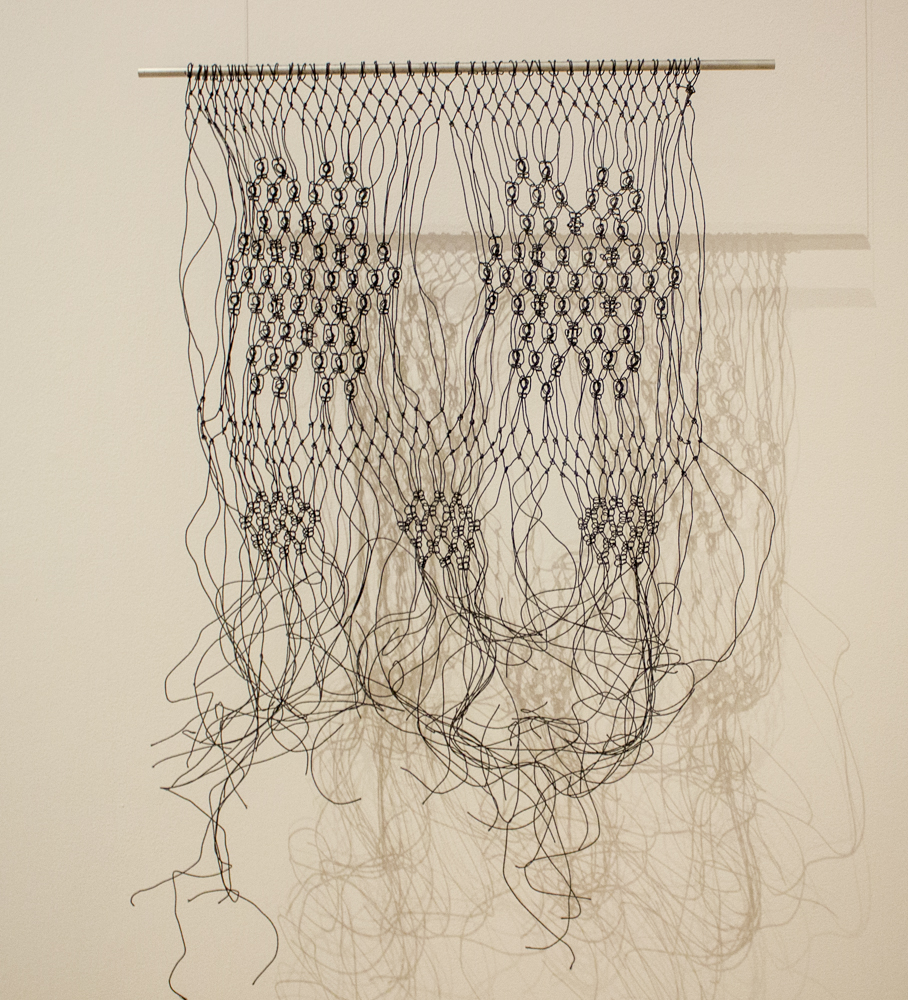
Makramé, 2011
Nevin Aladağ
(German, born Turkey, 1972)
Wire cable


Makramé, 2014 – Nevin Aladağ
Makramé, 2011
Nevin Aladağ
(German, born Turkey, 1972)
Wire cable
Makramé, 2014 – Nevin Aladağ
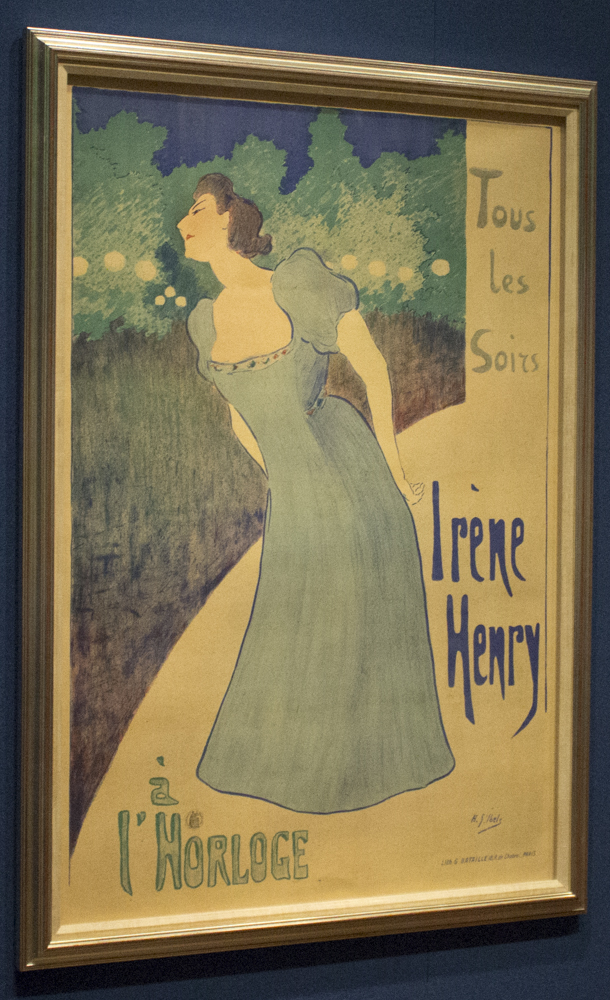
Irène Henry (1894)
Henri-Gabriel Ibels
French, 1867-1936
Color lithograph
Henri-Gabriel Ibels was a prominent figure in avant-garde circles in 1890s Paris and well-known for his inventive poster designs, characterized by areas of flat color and a strong sense of decorative pattern. In this poster, he represents the singer Irène Henry performing outdoors at a café-concert, L'Horloge, on the Champs Élysées in Paris. Café-concerts enjoyed great popularity in late 19th century France and served as a more informal space (allowing consumption of food and drink) than more conventional concert halls. Here, Irène Henry artfully leans forward and is silhouetted against the trees, gas lights and evening sky. The poster announces that she performs "tous les soirs" or "every night."
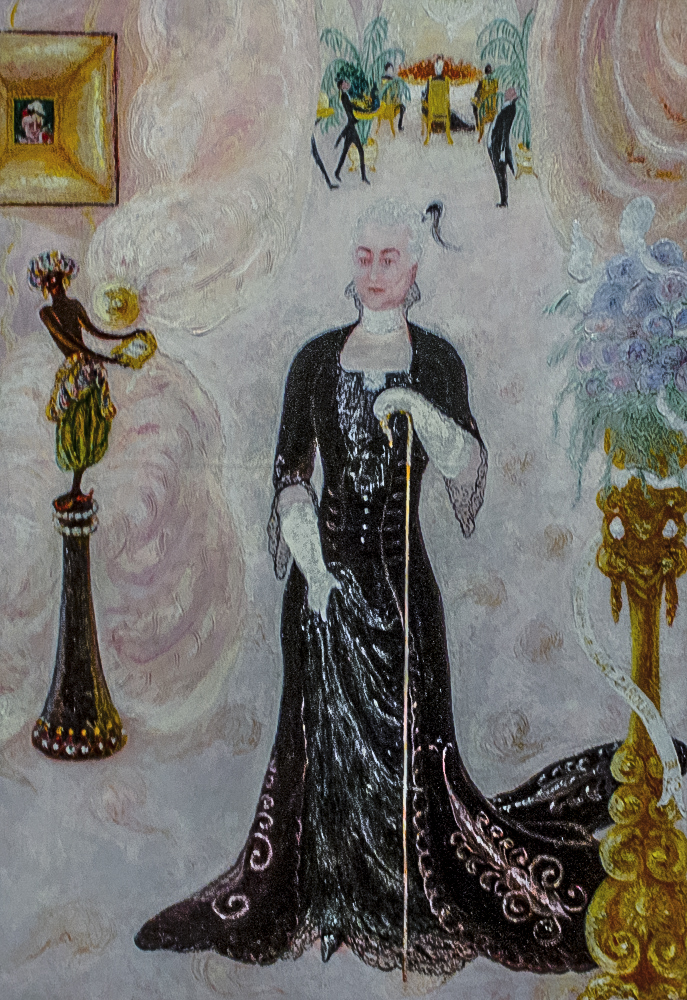
Portrait of My Aunt, Caroline Walter Neustadter, 1928
Florine Stettheimer
American, 1871–1944
Oil on canvas
"Before her death in 1944, Florine Stettheimer requested that all her paintings be destroyed. Fortunately, her family did not heed her wishes. Painted from memory, this portrait depicts Stettheimer’s beloved aunt who had passed away 16 years earlier. The pastel-colored setting, fanciful details, and flourishes incised into the heavy impasto (thick paint) enliven this memorial portrait. Stettheimer’s style has been regarded as naïve-looking yet sophisticated. It inspired comparisons to folk art, which was celebrated by many modern artists in the early 1900s."

“The sky dreams of stars, the earth dreams of love.” — Mihai Eminescu

The Artist’s Wife and Daughter Beatrice (1904)
William Sergeant Kendall
American (1869-1938)
Pastel on paper
"A small child wearing a white gown sits on its mother's lap, facing left. The mother is seated on a chair with a domed crest rail that can be seen at the right of the composition over her left shoulder. She holds the child with both hands while fixing her gaze beyond its face. She wears a blue and white striped gown with a lace collar. Although little known today, William Sergeant Kendall was a fixture in the American art world of the late 1800s and early 1900s. In this pastel, the artist's wife, Margaret, embraces their two-year old daughter, Beatrice. This tender, timeless relationship between mother and child represents Kendall's favorite subject. Kendall repeatedly explored a subject in pastel before painting the final composition in oil. It is possible that this piece is a highly finished study for a not-yet-located painting."
Bismillah
It’s a habit of yours to walk slowly.
You hold a grudge for years.
With such heaviness, how can you be modest?
With such attachments, do you expect to arrive anywhere?
Be wide as the air to learn a secret.
Right now you’re equal portions clay
and water, thick mud.
Abraham learned how the sun and moon and the stars all set.
He said, No longer will I try to assign partners for God.
You are so weak. Give up to grace.
The ocean takes care of each wave
till it gets to shore.
You need more help than you know.
You’re trying to live your life in open scaffolding.
Say Bismillah, In the name God,
As the priest does with knife when he offers an animal.
Bismillah your old self
to find your real name.
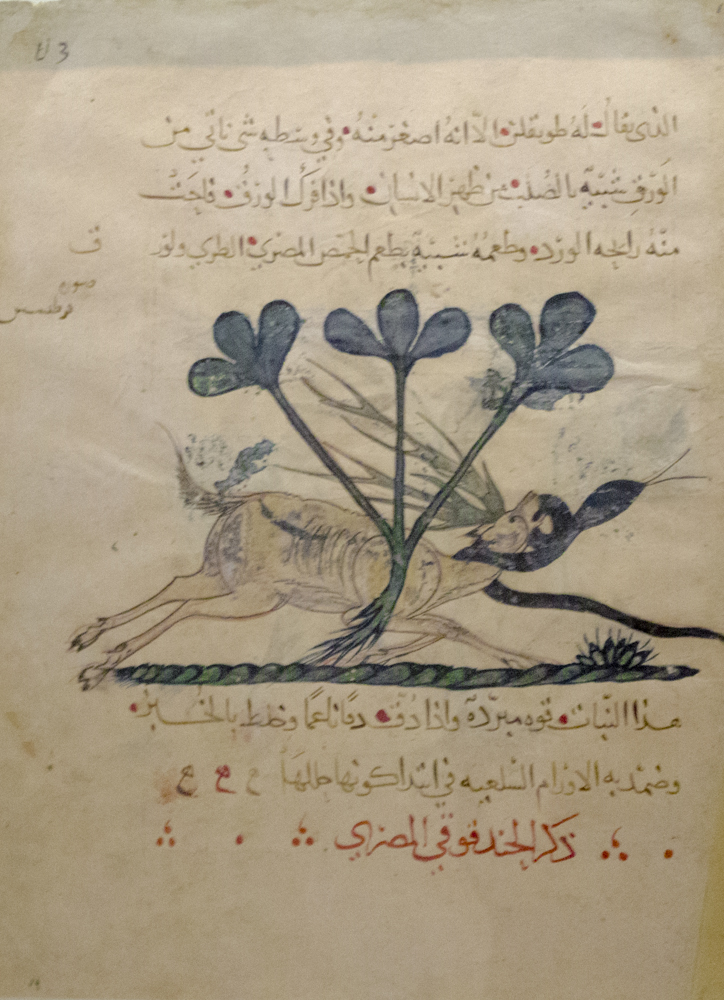

How Early Islamic Science Advanced Medicine
Seventh Century
After the Prophet Muhammad’s death in 632, Islam expands beyond Arabia to Persia, Palestine, Syria, Lebanon, Iraq, and North Africa.Eighth Century
Caliph Harun al-Rashid founds the House of Wisdom in Baghdad. The city’s scholars translate many ancient manuscripts and medical texts.Ninth Century
Al-Razi (Rhazes) is born in Persia. Physician, chemist, and teacher, he writes many important medical works later translated into Latin and Greek.10th Century
Surgeon Al-Zahrawi (Abulcasis) is born in Córdoba. Inventor of many medical instruments, he writes the first illustrated surgical book.11th Century
In Baghdad, Ibn Sina (Avicenna) writes the Canon of Medicine, a five-volume work encompassing all known medical knowledge of the time.12th Century
Ibn Rushd (Averroës) is born. Philosopher, astronomer, and physician, he writes a medical encyclopedia known as the Colliget in Latin.14th Century
Ottoman Serefeddin Sabuncuoglu is born. A surgeon, he creates illustrated works showing the advanced procedures of Muslim medicine.


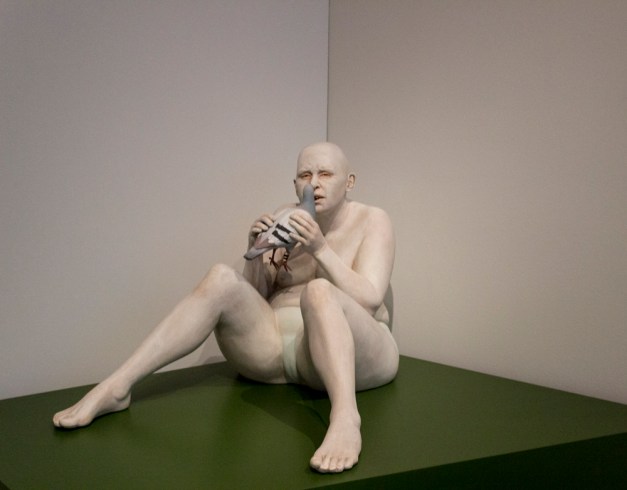
Tip Toland is an American ceramic artist and teacher who was born in Pottstown, Pennsylvania. She earned a BFA in Ceramics from the University of Colorado and an MFA in Ceramics from Montana State.

The Triumph of Bacchus
(1635-1636)
Nicolas Poussin
French, 1594-1665
Oil on canvas
"Bacchus, the god of wine, leads this entourage of mythological characters in a triumphal return from victories in India. His chariot is drawn by centaurs, mythical creatures who are half-human and half-horse. Accompanying him are Pan with his pipes and Hercules, who has stolen a tripod from Apollo, the sun god, seen driving his chariot across the sky. A river god, symbolizing the river Indus and the Indian subcontinent, lounges in the lower right foreground. Poussin spent most of his career in Rome and was the prime inspiration for the classical revival in French art. This painting was one of a series of three commissioned by the famous French statesman Cardinal Richelieu."
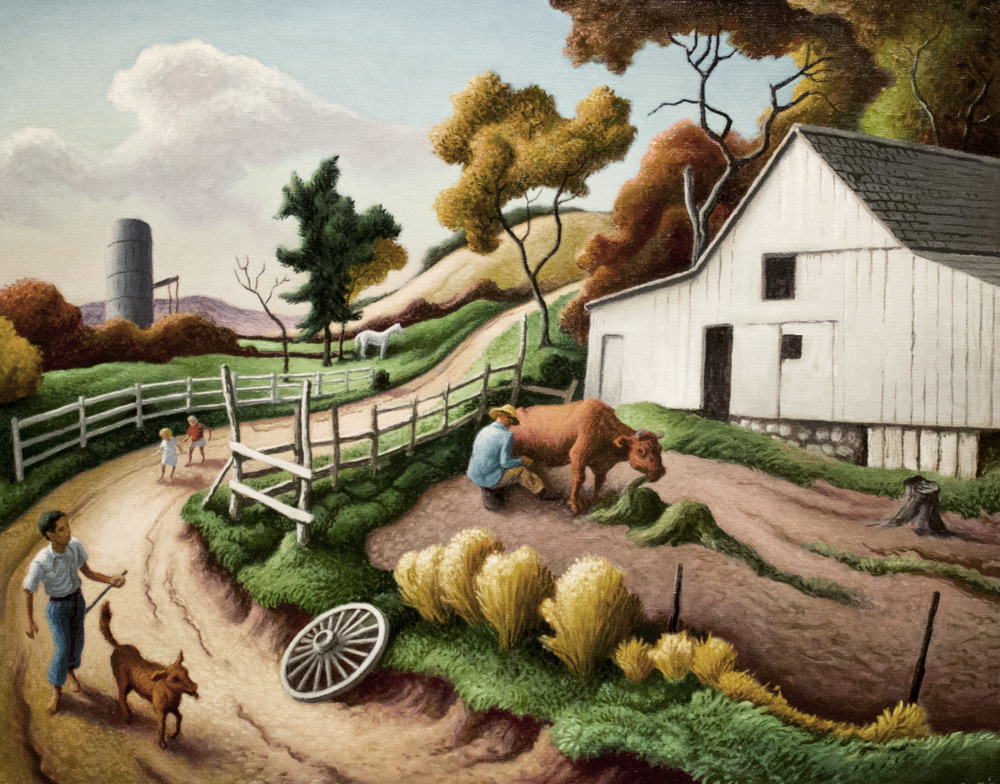
The Benton Farm (1973)
Thomas Hart Benton
American, 1889–1975
Oil on canvas
"Painted two years before Thomas Hart Benton’s death, The Benton Farm highlights the artist’s signature use of layered curves and bold contours. Benton had been working in this style for many years, creating a consistent vision of American life despite the advent of significant new art movements. Benton’s unwavering style and accessible subject matter continued to find eager audiences, including a local businessman who purchased The Benton Farm for his Plaza office. The painting resonated with his own work to create a business and his upbringing on a dairy farm."
 Maverick Mist