Maverick Mist

Intertwined passions ~

  • Home
  • About
  • Contact

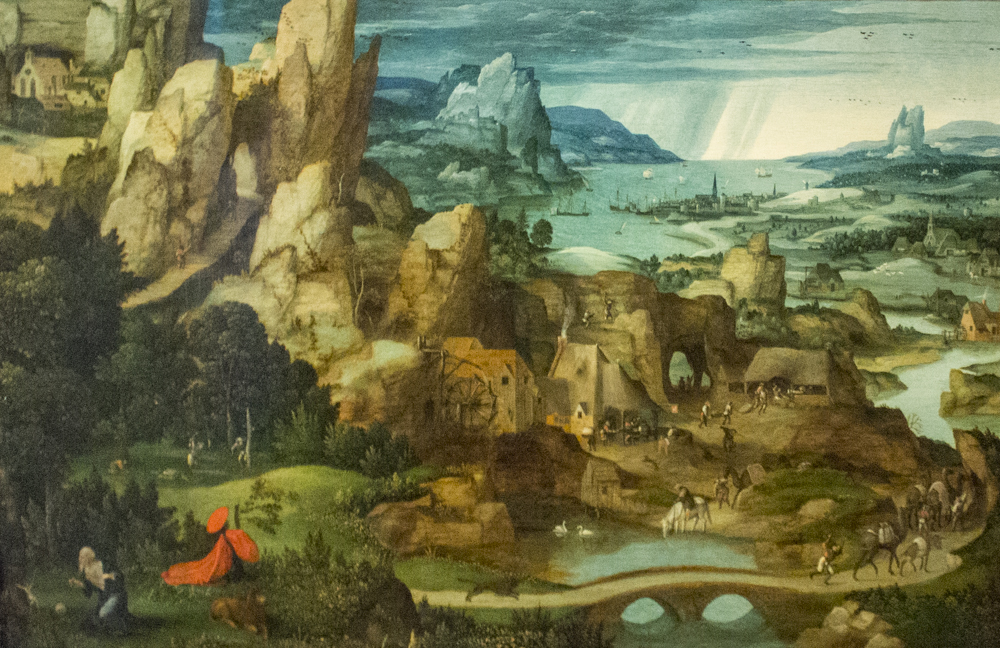
Pentitent Saint Jerome in Landscape

Posted by Maverick ~ on August 12, 2018
Posted in: Art, Music, Photography. Tagged: 1500's, Flemish (Antwerp), Landscape, Lou Reed, Master of the Female Half-Lengths, Nelson-Atkins Museum of Art, Oil on wood panel, Penitent Saint Jerome in Landscape, Perfect Day.


Penitent Saint Jerome in Landscape (1525-1530)
Master of the Female Half-Lengths
Flemish (Antwerp), active 1520s-1530s
Oil on wood panel

"The Master of the Female Half-Lengths is a name given to an as yet unidentified artist who worked in Antwerp and Bruges and specialized in paintings of half-length female figures. A number of landscapes have been attributed to him, including this panel. This type of panoramic landscape with jagged rocks and small figures engaged in varied activities was intended to evoke the harmony between man and the wonders of nature. Landscapes at this time were considered works of mere imitation, requiring little imaginative power, so their status was usually enhanced by endowing them with a religious subject, in this case the Penitent Saint Jerome."

🌳

The Vengeance of Hop-Frog

Posted by Maverick ~ on August 11, 2018
Posted in: Art, Music, Photography. Tagged: 1898, David Bowie, Edgar Allan Poe, Hand-colored etching, Hop Frog, James Ensor, Lou Reed, The Vengeance of Hop-Frog, theatrical metaphors.

The Vengeance of Hop-Frog (1898)
James Ensor
Belgian, 1860-1949
Hand-colored etching

"James Ensor used theatrical metaphors to critique the inhumanity of the world around him. In this print, he illustrates a scene from "Hop-Frog," a short story by Edgar Allan Poe. In Poe's story, Hop-Frog (a dwarf court jester so named because his physical deformity prevented him from walking upright) avenges the mistreatment that he and fellow dwarf Trippetta have suffered at the hands of the king and his entourage. Hop-Frog convinces the royal band to wear orangutan costumes, chains them together like wild beasts and leads them into a grand masquerade ball, where they gleefully terrify the guests. As seen here, in a shocking act of retribution, he hoists them to the ceiling, climbs up to "discover" their identities and "accidentally" sets them afire with his torch."

🐸

Europa and the Bull

Posted by Maverick ~ on August 10, 2018
Posted in: Art, Music, Photography. Tagged: Bernardo Cavallino, Europa and the Bull, Italian, Johann Heinrich Schönfeld, Metamorphoses, Nelson-Atkins Museum of Art, Oil on canvas, Ovid, The Olympians.

Europa and the Bull, ca. 1645
Bernardo Cavallino and follower (Johann Heinrich Schönfeld? 1609-1683)
Italian, 1616-ca. 1656
Oil on canvas

"The Latin poet Ovid, in his Metamorphoses, tells a tale of the god Jupiter, who fell in love with Europa, daughter of the Phoenician King Agenor. Jupiter, by disguising himself as a bull, succeeded in persuading Europa to climb upon his back and carried her off to the island of Crete. Like many Neapolitan artists of his generation, Cavallino was influenced by Caravaggio, who had worked in Naples, an influence apparent in the dramatic contrasts of light and shade that add drama and anticipation to this scene. There is an elfin quality to the two principal figures here, typical of Cavallino's intense but piquant style. The coarser figures in the background, however, were probably added by an assistant."

🐂

On Marriage

Posted by Maverick ~ on August 9, 2018
Posted in: Nature, Photography, Poetry. Tagged: #Throwback Thursday, Kahlil Gibran, Leonard Cohen, love, On Marriage.

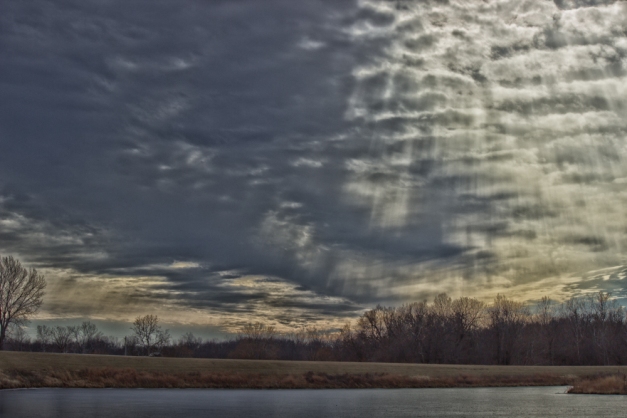
20150117-IMG_0145-Edit
You were born together, and together you shall be forevermore.
You shall be together when the white wings of death scatter your days.
Ay, you shall be together even in the silent memory of God.
But let there be spaces in your togetherness,
And let the winds of the heavens dance between you.

Love one another, but make not a bond of love:
Let it rather be a moving sea between the shores of your souls.
Fill each other’s cup but drink not from one cup.
Give one another of your bread but eat not from the same loaf
Sing and dance together and be joyous, but let each one of you be alone,
Even as the strings of a lute are alone though they quiver with the same music.

Give your hearts, but not into each other’s keeping.
For only the hand of Life can contain your hearts.
And stand together yet not too near together:
For the pillars of the temple stand apart,
And the oak tree and the cypress grow not in each other’s shadow.

❤

Kahlil Gibran – On Marriage


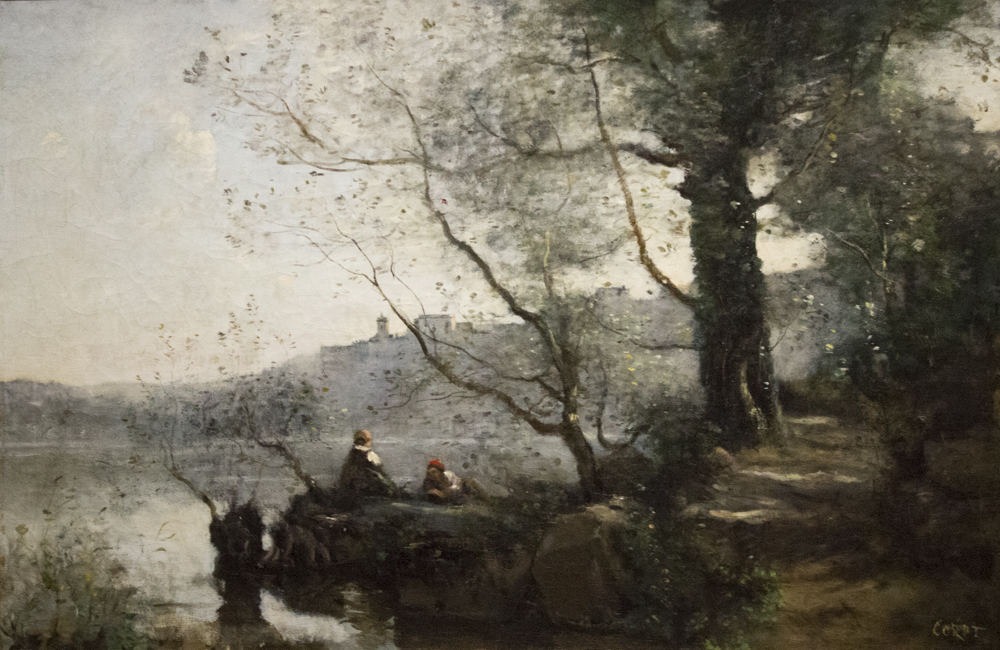
View of Lake Garda

Posted by Maverick ~ on August 8, 2018
Posted in: Art, Music, Nature, Photography. Tagged: French, Italy, Jean-Baptiste-Camille Corot, Landscape, memory, Nelson-Atkins Museum of Art, Oil on canvas, Otis Redding, Paris, The Dock Of The Bay, View of Lake Garda.

View of Lake Garda
(about 1865–1870)
Jean-Baptiste-Camille Corot
French, 1796–1875
Oil on canvas

"Jean-Baptiste-Camille Corot was one of the leading French landscape painters of the 1800s. During repeated trips to Italy between the 1820s and 1840s, he dedicated himself to painting and sketching from nature. Later in life, when he preferred to work in his Parisian studio, Corot relied on these sketches for inspiration or painted landscapes from memory. In this painting, a boatman and a contadina (Italian peasant woman) lounge on the banks of Lake Garda, a site that Corot had visited three decades earlier."

🎣

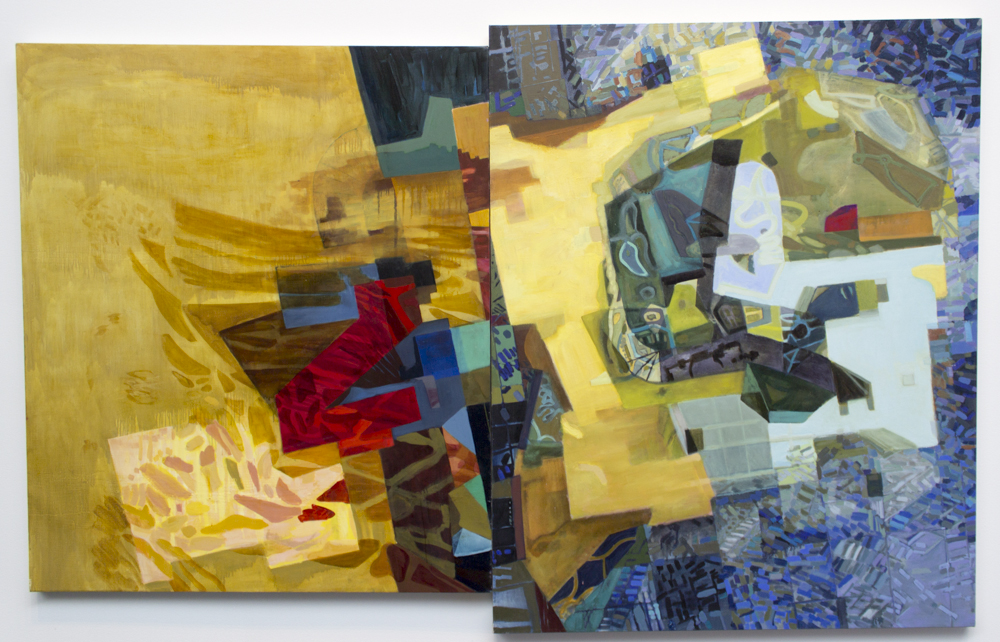
Plan B

Posted by Maverick ~ on August 7, 2018
Posted in: Art, Music, Photography. Tagged: 2010, abstraction, Barbara Grad, Imagination, Imagine, John Lennon, Kemper Museum of Contemporary Art, Oil on linen, Plan B.


Plan B (2010)
Barbara Grad
Oil on linen

“My work is inspired by a love of paint and the fiction of painting. A strong belief in the personal visual experience is reinforced by my travels and everyday living; an integration of art and life. Familiar shapes are not recognized but create ideas or metaphors. Imagery is assembled, layered and veiled to offer multiple meanings. Abstraction enables the freedom of invention. An array of graphic figuration is referenced, including: water, air and locations. these are shapes and rhythms where man-made forms merge with aerial views and reflections. It is the juxtaposition of these components which create an invented space and visual metaphor of how our culture and physical landscape has changed and continues to advance.

Understanding a constructed mysterious illusion is realized through the paint. Imagery is created through a balance of representation and abstraction, then moments of connection and disconnection appear. Using bold flat color placed adjacent to natural light and shadow, a collision of perspectives and invented spaces are instinctively discovered. It’s an uncertain territory, where a man-made place has landscape roots and respects the beauty of nature. They are landscapes with a vague familiarity of nature that hardly exists. There are no answers, only questions of the changes confronting us.

I work in a studio, in a private way, but in relation to my world experience. I use my hands and get dirty to understand the physicality of the paint. Color needs light but can also be a pleasure. It is messy thinking and graphic imagery is a way to simplify the ideas.

Reality shapes my imagination and optimistically, my imagination shapes a painted reality.”  — Barbara Grad

💠
Venice, the Grand Canal with the Doge’s Palace

Posted by Maverick ~ on August 6, 2018
Posted in: Art, Music, Photography. Tagged: 1800's, American, Connie Francis, Italy, memory, Nelson-Atkins Museum of Art, Oil on canvas, Summertime In Venice, Thomas Moran, Venice, Venice the Grand Canal with the Doge's Palace.

Venice, the Grand Canal with the Doge’s Palace, 1889
Thomas Moran
American, 1837–1926
Oil on canvas

In the late 19th century, Venice was heralded as a refuge from modernity, and Thomas Moran's paintings of the legendary Italian city reinforced this perception. Moran's Venice, the Grand Canal with the Doge's Palace shows famous buildings along the Grand Canal bathed in a romantic, atmospheric glow. Fanciful boats, gondolas and figures dressed in historical costumes contribute exotic details. Moran, who first visited Venice in 1886, created this and related scenes from memory with the aid of studies.

Moran followed a long line of artists who painted Venice, including English painter J. M. W. Turner, whose feathery brushwork and poetic treatment of light exerted great influence on the American.

🔸

Footed Dish

Posted by Maverick ~ on August 5, 2018
Posted in: Art, Music, Photography. Tagged: 1932, American, Earthenware with glaze, Faith, Footed Dish, Henry Varnum Poor, In My Life, Judy Collins, love, Nelson-Atkins Museum of Art.

Footed Dish, 1932
Henry Varnum Poor
American, 1888-1970
Earthenware with glaze

Henry Varnum Poor began his artistic career with painting and drawing, but then turned to ceramics for his livelihood. He became one of America's leading ceramicists of the 1920s. Poor, a self-taught potter, thought of ceramics as canvases for his compositions, thus aligning his work more with contemporary paintings than ceramics. The abstract sgraffito decoration, a technique by which slip or glaze is incised to reveal the clay body, and the limited color range are characteristic of Poor's ceramics. The artist made the dish in honor of his parents, Alfred J. Poor and Josephine Graham Poor, whose names encircle the outer rim of the dish. The top of the rim reads: "Love and faith and sometimes even clay can be as golden as the purest gold."

🔸

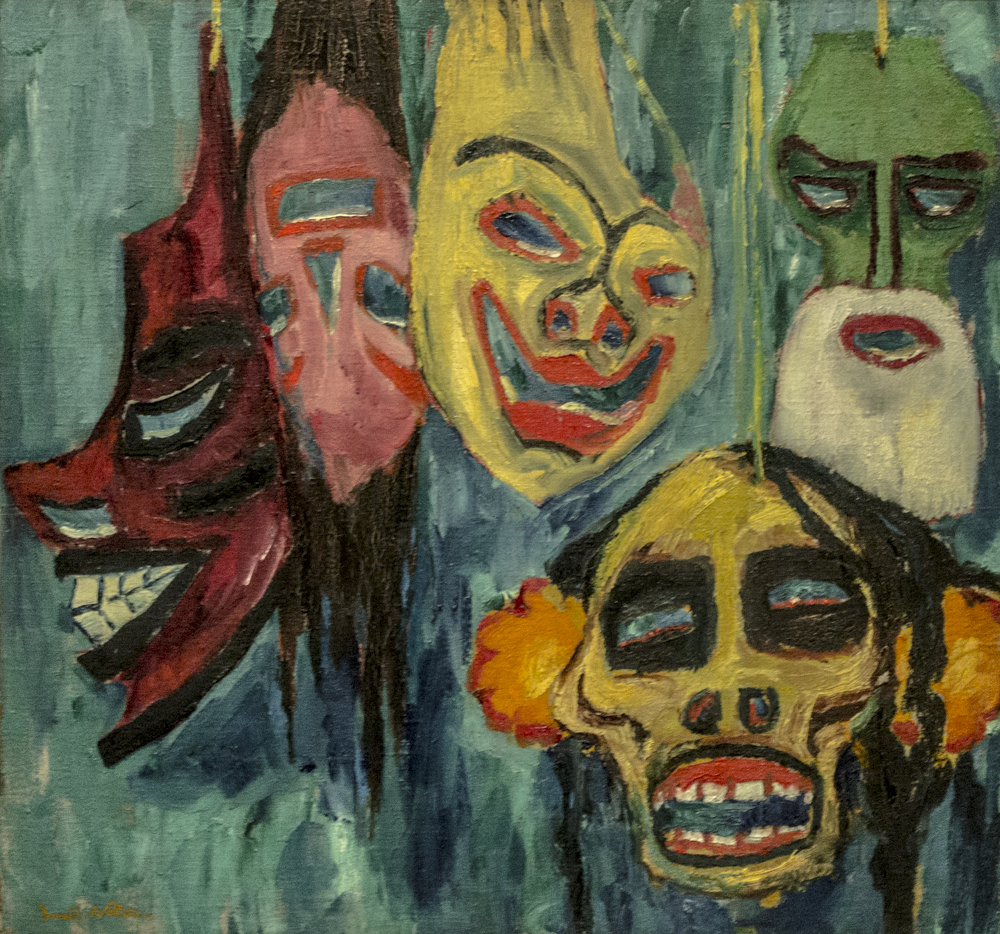
Masks

Posted by Maverick ~ on August 4, 2018
Posted in: Art, Music, Photography. Tagged: 1911, Brazil, elemental force, Emil Nolde, Loreena McKennitt, Marrakesh Night Market, Masks, Munduruku man, Museum of Ethnology Berlin, Nelson-Atkins Museum of Art, Oil on canvas.

Masks (1911)
Emil Nolde
German, 1867–1956
Oil on canvas

"Emil Nolde used bold brushwork and intense colors to reveal what he called the "elemental force" of the objects he had studied at Berlin’s Museum of Ethnology. Although the work is titled as such, not all forms in this painting are masks. Nolde’s sketches reveal that the profile image at left is actually a canoe prow from the Solomon Islands (then a German colony). The frontal image at lower right is the shrunken head of a Munduruku man from Brazil."

🎭

Impromptu

Posted by Maverick ~ on August 3, 2018
Posted in: Art, Music, Photography. Tagged: abstract, American, Fantaisie Impromptu, Frédéric Chopin, Helen Torr, Impromptu, Nelson-Atkins Museum of Art, Oil on canvas.

Impromptu (1929)
Helen Torr
American, 1886–1967
Oil on canvas

"Helen Torr’s Impromptu dates to the most prolific period in her career. It is, believe it or not, one of Torr’s larger paintings. The small but engaging composition exemplifies a balance of rhythm, control, and formal contrasts. A grid of squares, vertical bars, and ray-like dashes enliven overlapping circular forms and animate the painting. Carefully arranged and floating above the light-colored background, these elements demonstrate Torr’s interest in abstraction."

🎹

Posts navigation

← Older Entries
Newer Entries →
  • Blogroll

    • Art
    • Dala
    • David Francey
    • EyeEm Blog
    • LukeMD
    • Maverick Mist Photos
    • WordPress.com News
  • Links

    • An Introduction to Macro Photography
    • Annexe in Cley
    • Anrostudio
    • Artsy’s Louise Bourgeois page
    • Dala
    • David Francey
    • Face and Body Art by Mar
    • Mama's Beach Cam
    • Pablove
    • Tara Linda
    • The Where To Start Chart
  • Categories

    • Animation
    • Art
    • Flowers
    • Inspiration
    • Miscellaneous
    • Monochrome Madness
    • Music
    • Nature
    • Photography
    • Poetry
    • Uncategorized
    • Video
    • Weekly Photo Challenge
  • Archives

  • Award free but thank you for making me a nominee.

    This slideshow requires JavaScript.

Blog at WordPress.com.
Maverick Mist
Blog at WordPress.com.
  • Subscribe Subscribed
    • Maverick Mist
    • Join 3,575 other subscribers
    • Already have a WordPress.com account? Log in now.
    • Maverick Mist
    • Subscribe Subscribed
    • Sign up
    • Log in
    • Report this content
    • View site in Reader
    • Manage subscriptions
    • Collapse this bar
 

Loading Comments...