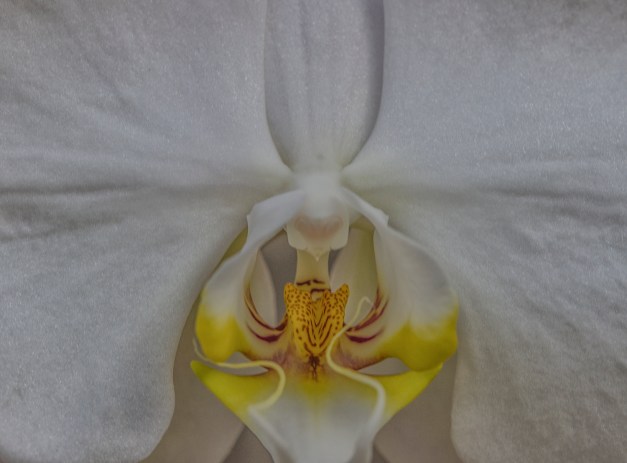
*We are stardust, we are golden
We are billion year old carbon
And we got to get ourselves back to the garden*
Joni Mitchell

*We are stardust, we are golden
We are billion year old carbon
And we got to get ourselves back to the garden*
Joni Mitchell
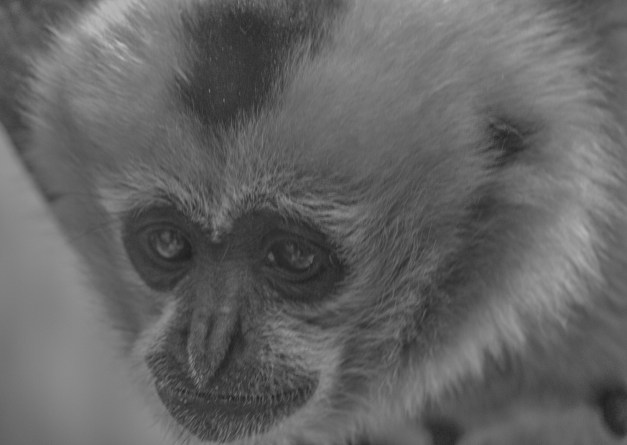
“The love for all living creatures is the most noble attribute of man.” ― Charles Darwin


Dream tonight of peacock tails, Diamond fields and spouter whales.
Ills are many, blessing few, But dreams tonight will shelter you.   Herman Melville


“I thought the most beautiful thing in the world must be shadow.” ― Sylvia Plath
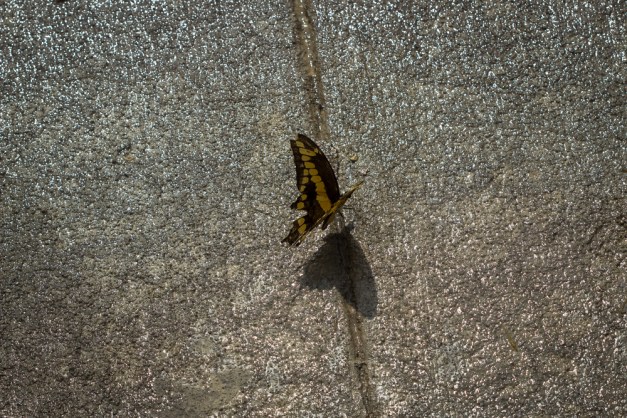
“Time flies over us, but leaves its shadow behind.” — Nathaniel Hawthorne
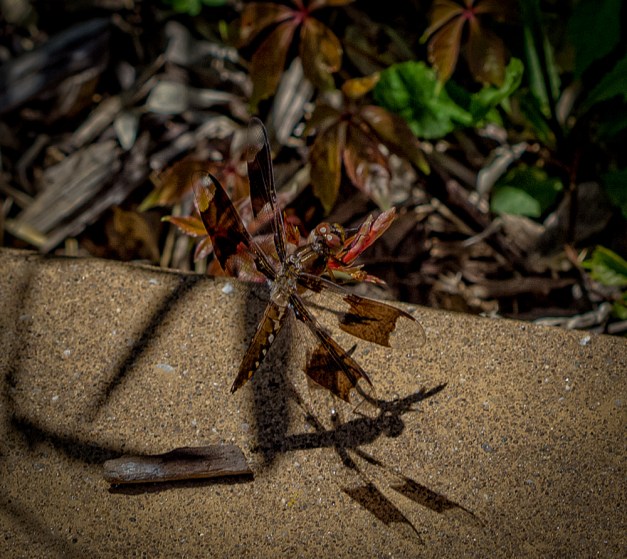
“The true work of art is but a shadow of the divine perfection.” — Michelangelo
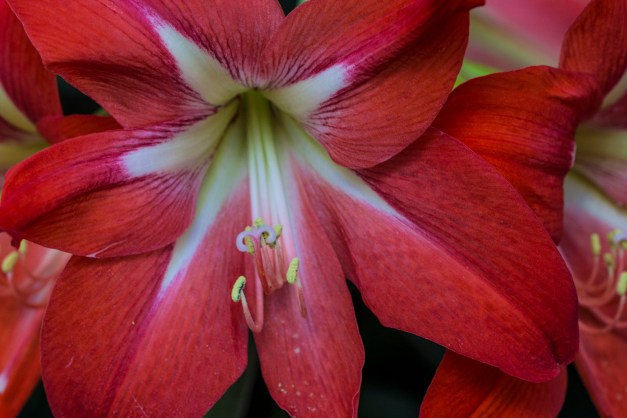
The best and most beautiful things in the world cannot be seen
or even touched - they must be felt with the heart. -- Helen Keller


One Art
Elizabeth Bishop
The art of losing isn’t hard to master;
so many things seem filled with the intent
to be lost that their loss is no disaster.
Lose something every day. Accept the fluster
of lost door keys, the hour badly spent.
The art of losing isn’t hard to master.
Then practice losing farther, losing faster:
places, and names, and where it was you meant
to travel. None of these will bring disaster.
I lost my mother’s watch. And look! my last, or
next-to-last, of three loved houses went.
The art of losing isn’t hard to master.
I lost two cities, lovely ones. And, vaster,
some realms I owned, two rivers, a continent.
I miss them, but it wasn’t a disaster.
—Even losing you (the joking voice, a gesture
I love) I shan’t have lied. It’s evident
the art of losing’s not too hard to master
though it may look like (Write it!) like disaster.

“Pleasure is wild and sweet. She likes purple flowers. She loves the sun and the wind and the night sky. She carries a silver bowl full of liquid moonlight. She has a cat named Midnight with stars on his paws. Many people mistrust Pleasure, and even more misunderstand her. For a long time I could barely stand to be in …the same room with her…”
…………………………………………………….. ― J. Ruth Gendler, The Book of Qualities


The Boy Who Became a Robin
by Henry R. Schoolcraft
The Myth of Hiawatha
Once upon a time there was an old Indian who had an only son, whose name was Opeechee. The boy had come to the age when every Indian lad makes a long fast, in order to secure a Spirit to be his guardian for life. Now, the old man was very proud, and he wished his son to fast longer than other boys, and to become a greater warrior than all others. So he directed him to prepare with solemn ceremonies for the fast.
After the boy had been in the sweating lodge and bath several times, his father commanded him to lie down upon a clean mat, in a little lodge apart from the rest. “My son,” said he, “endure your hunger like a man, and at the end of TWELVE DAYS, you shall receive food and a blessing from my hands.”

The boy carefully did all that his father commanded, and lay quietly with his face covered, awaiting the arrival of his guardian Spirit who was to bring him good or bad dreams. His father visited him every day, encouraging him to endure with patience the pangs of hunger and thirst. He told him of the honor and renown that would be his if he continued his fast to the end of the twelve days.
To all this the boy replied not, but lay on his mat without a murmur of discontent, until the ninth day – when he said, “My father, the dreams tell me of evil. May I break my fast now, and at a better time make a new one?”
“My son,” replied the old man, “you know not what you ask. If you get up now, all your glory will depart. Wait patiently a little longer. You have but three days more to fast, then glory and honor will be yours.”
The boy said nothing more, but, covering himself closer, he lay until the eleventh day, when he spoke again, “My father,” said he, “the dreams forebode evil. May I break my fast now, and at a better time make a new one?”
“My son,” replied the old man again, “you know not what you ask. Wait patiently a little longer. You have but one more day to fast. Tomorrow I will myself prepare a meal and bring it to you.”
The boy remained silent, beneath his covering, and motionless except for the gentle heaving of his breast. Early the next morning his father, overjoyed at having gained his end, prepared some food. He took it and hastened to the lodge intending to set it before his son. On coming to the door of the lodge what was his surprise to hear the boy talking to some one. He lifted the curtain hanging before the doorway, and looking in saw his son painting his breast with vermilion. And as the lad laid on the bright color as far back on his shoulders as he could reach, he was saying to himself:
“My father has destroyed my fortune as a man. He would not listen to my requests. I shall be happy forever, because I was obedient to my parent – but he shall suffer. My guardian Spirit has given me a new form, and now I must go!”
At this his father rushed into the lodge, crying, “My son! my son! I pray you leave me not!”
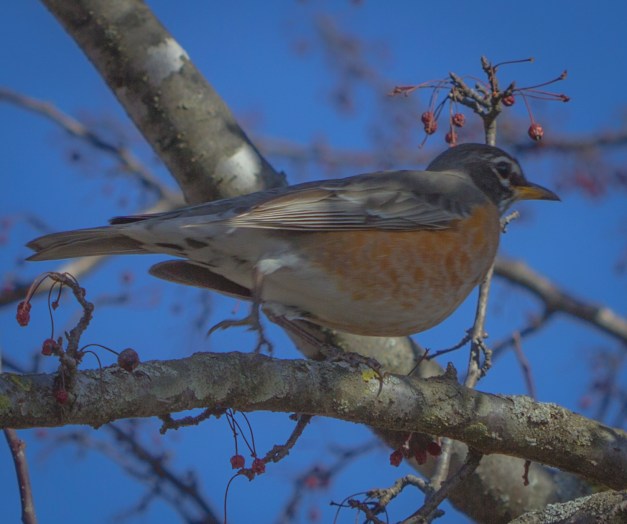
But the boy, with the quickness of a bird, flew to the top of the lodge, and perching upon the highest pole, was instantly changed into a most beautiful robin redbreast.
He looked down on his father with pity in his eyes, and said, “Do not sorrow, O my father, I am no longer your boy, but Opeechee the robin. I shall always be a friend to men, and live near their dwellings. I shall ever be happy and content. Every day will I sing you songs of joy. The mountains and fields yield me food. My pathway is in the bright air.” Then Opeechee the robin stretched himself as if delighting in his new wings, and caroling his sweetest song, he flew away to the near-by trees.

To M —
by Edgar Allen Poe
O! I care not that my earthly lot
Hath little of Earth in it,
That years of love have been forgot
In the fever of a minute:
I heed not that the desolate
Are happier, sweet, than I,
But that you meddle with my fate
Who am a passer by.
It is not that my founts of bliss
Are gushing- strange! with tears-
Or that the thrill of a single kiss
Hath palsied many years-
‘Tis not that the flowers of twenty springs
Which have wither’d as they rose
Lie dead on my heart-strings
With the weight of an age of snows.
Not that the grass- O! may it thrive!
On my grave is growing or grown-
But that, while I am dead yet alive
I cannot be, lady, alone.

Great men are like eagles, and build their nest on some lofty solitude. — Arthur Schopenhauer

“I want to be with those who know secret things or else alone.” ― Rainer Maria Rilke
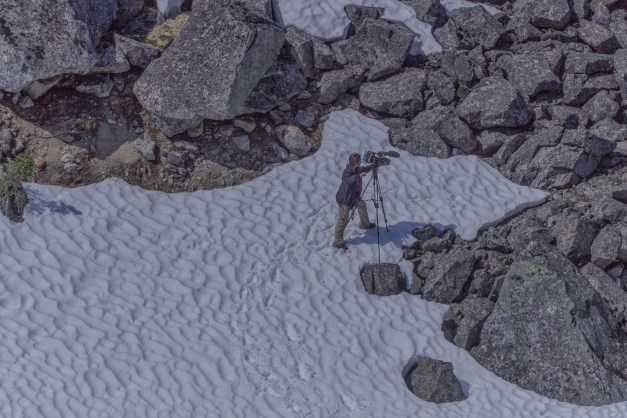
“The soul that sees beauty may sometimes walk alone.” ― Johann Wolfgang von Goethe
 Maverick Mist