
Dream tonight of peacock tails, Diamond fields and spouter whales.
Ills are many, blessing few, But dreams tonight will shelter you.   Herman Melville

Dream tonight of peacock tails, Diamond fields and spouter whales.
Ills are many, blessing few, But dreams tonight will shelter you. Herman Melville

“I thought the most beautiful thing in the world must be shadow.” ― Sylvia Plath
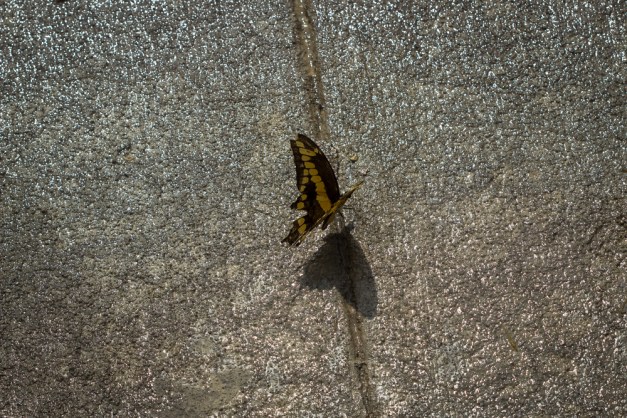
“Time flies over us, but leaves its shadow behind.” — Nathaniel Hawthorne
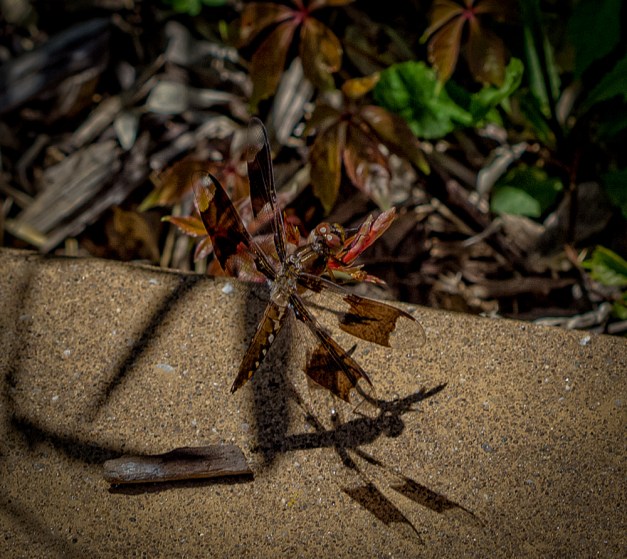
“The true work of art is but a shadow of the divine perfection.” — Michelangelo
One Art
Elizabeth Bishop
The art of losing isn’t hard to master;
so many things seem filled with the intent
to be lost that their loss is no disaster.
Lose something every day. Accept the fluster
of lost door keys, the hour badly spent.
The art of losing isn’t hard to master.
Then practice losing farther, losing faster:
places, and names, and where it was you meant
to travel. None of these will bring disaster.
I lost my mother’s watch. And look! my last, or
next-to-last, of three loved houses went.
The art of losing isn’t hard to master.
I lost two cities, lovely ones. And, vaster,
some realms I owned, two rivers, a continent.
I miss them, but it wasn’t a disaster.
—Even losing you (the joking voice, a gesture
I love) I shan’t have lied. It’s evident
the art of losing’s not too hard to master
though it may look like (Write it!) like disaster.

The Boy Who Became a Robin
by Henry R. Schoolcraft
The Myth of Hiawatha
Once upon a time there was an old Indian who had an only son, whose name was Opeechee. The boy had come to the age when every Indian lad makes a long fast, in order to secure a Spirit to be his guardian for life. Now, the old man was very proud, and he wished his son to fast longer than other boys, and to become a greater warrior than all others. So he directed him to prepare with solemn ceremonies for the fast.
After the boy had been in the sweating lodge and bath several times, his father commanded him to lie down upon a clean mat, in a little lodge apart from the rest. “My son,” said he, “endure your hunger like a man, and at the end of TWELVE DAYS, you shall receive food and a blessing from my hands.”

The boy carefully did all that his father commanded, and lay quietly with his face covered, awaiting the arrival of his guardian Spirit who was to bring him good or bad dreams. His father visited him every day, encouraging him to endure with patience the pangs of hunger and thirst. He told him of the honor and renown that would be his if he continued his fast to the end of the twelve days.
To all this the boy replied not, but lay on his mat without a murmur of discontent, until the ninth day – when he said, “My father, the dreams tell me of evil. May I break my fast now, and at a better time make a new one?”
“My son,” replied the old man, “you know not what you ask. If you get up now, all your glory will depart. Wait patiently a little longer. You have but three days more to fast, then glory and honor will be yours.”
The boy said nothing more, but, covering himself closer, he lay until the eleventh day, when he spoke again, “My father,” said he, “the dreams forebode evil. May I break my fast now, and at a better time make a new one?”
“My son,” replied the old man again, “you know not what you ask. Wait patiently a little longer. You have but one more day to fast. Tomorrow I will myself prepare a meal and bring it to you.”
The boy remained silent, beneath his covering, and motionless except for the gentle heaving of his breast. Early the next morning his father, overjoyed at having gained his end, prepared some food. He took it and hastened to the lodge intending to set it before his son. On coming to the door of the lodge what was his surprise to hear the boy talking to some one. He lifted the curtain hanging before the doorway, and looking in saw his son painting his breast with vermilion. And as the lad laid on the bright color as far back on his shoulders as he could reach, he was saying to himself:
“My father has destroyed my fortune as a man. He would not listen to my requests. I shall be happy forever, because I was obedient to my parent – but he shall suffer. My guardian Spirit has given me a new form, and now I must go!”
At this his father rushed into the lodge, crying, “My son! my son! I pray you leave me not!”
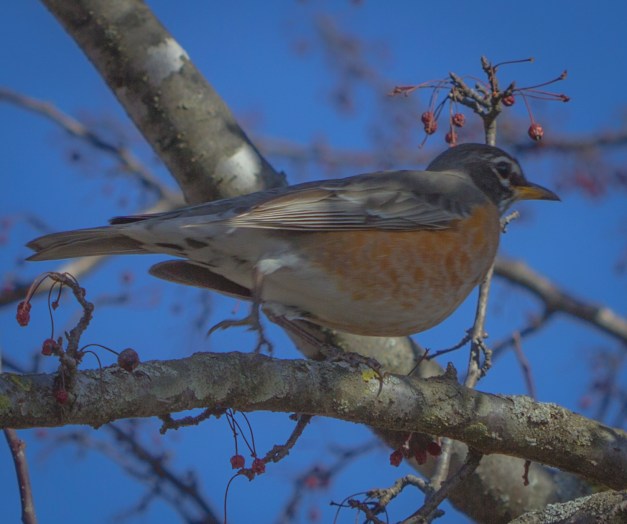
But the boy, with the quickness of a bird, flew to the top of the lodge, and perching upon the highest pole, was instantly changed into a most beautiful robin redbreast.
He looked down on his father with pity in his eyes, and said, “Do not sorrow, O my father, I am no longer your boy, but Opeechee the robin. I shall always be a friend to men, and live near their dwellings. I shall ever be happy and content. Every day will I sing you songs of joy. The mountains and fields yield me food. My pathway is in the bright air.” Then Opeechee the robin stretched himself as if delighting in his new wings, and caroling his sweetest song, he flew away to the near-by trees.

Great men are like eagles, and build their nest on some lofty solitude. — Arthur Schopenhauer
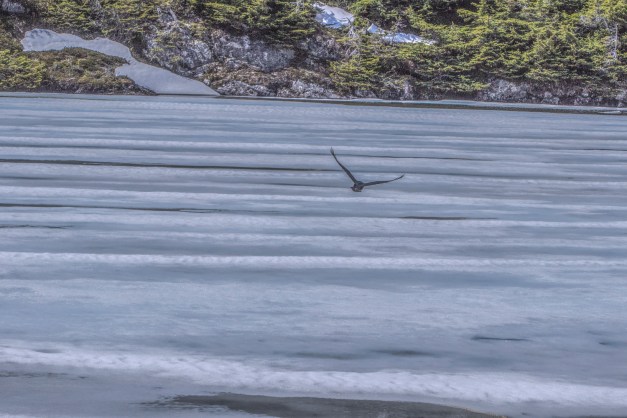
“I want to be with those who know secret things or else alone.” ― Rainer Maria Rilke
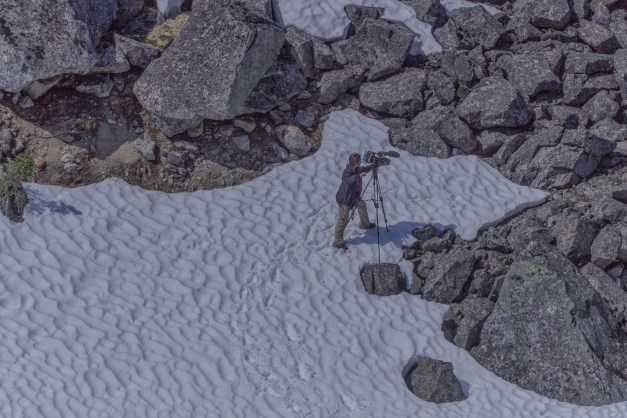
“The soul that sees beauty may sometimes walk alone.” ― Johann Wolfgang von Goethe
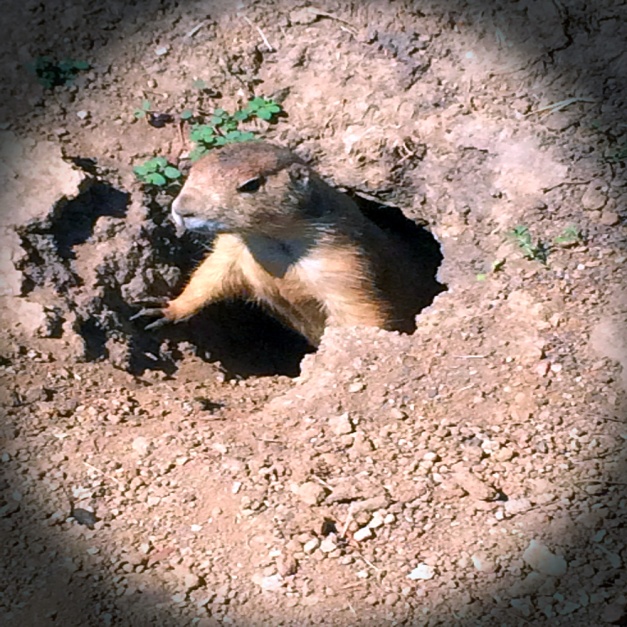
“The Groundhog”
Richard Eberhart
In June, amid the golden fields,
I saw a groundhog lying dead.
Dead lay he; my senses shook,
And mind outshot our naked frailty.
There lowly in the vigorous summer
His form began its senseless change,
And made my senses waver dim
Seeing nature ferocious in him.
Inspecting close maggots’ might
And seething cauldron of his being,
Half with loathing, half with a strange love,
I poked him with an angry stick.
The fever arose, became a flame
And Vigour circumscribed the skies,
Immense energy in the sun,
And through my frame a sunless trembling.
My stick had done nor good nor harm.
Then stood I silent in the day
Watching the object, as before;
And kept my reverence for knowledge
Trying for control, to be still,
To quell the passion of the blood;
Until I had bent down on my knees
Praying for joy in the sight of decay.
And so I left; and I returned
In Autumn strict of eye, to see
The sap gone out of the groundhog,
But the bony sodden hulk remained
But the year had lost its meaning,
And in intellectual chains
I lost both love and loathing,
Mured up in the wall of wisdom.
Another summer took the fields again
Massive and burning, full of life,
But when I chanced upon the spot
There was only a little hair left,
And bones bleaching in the sunlight
Beautiful as architecture;
I watched them like a geometer,
And cut a walking stick from a birch.
It has been three years, now.
There is no sign of the groundhog.
I stood there in the whirling summer,
My hand capped a withered heart,
And thought of China and of Greece,
Of Alexander in his tent;
Of Montaigne in his tower,
Of Saint Theresa in her wild lament.
American Tune
by Paul Simon
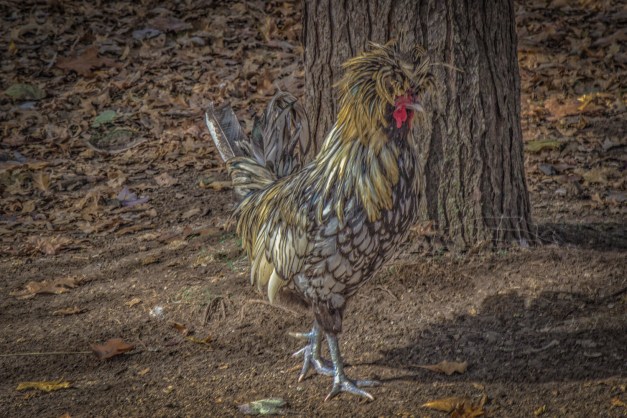
Hello Rooster
Be not afraid of growing slowly, be afraid only of standing still. — Chinese Proverb
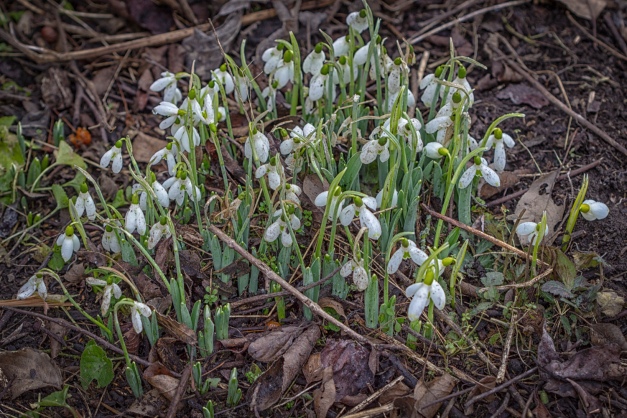
“The snowdrop and primrose our woodlands adorn, and violets bathe in the wet o’ the morn.”
Robert Burns
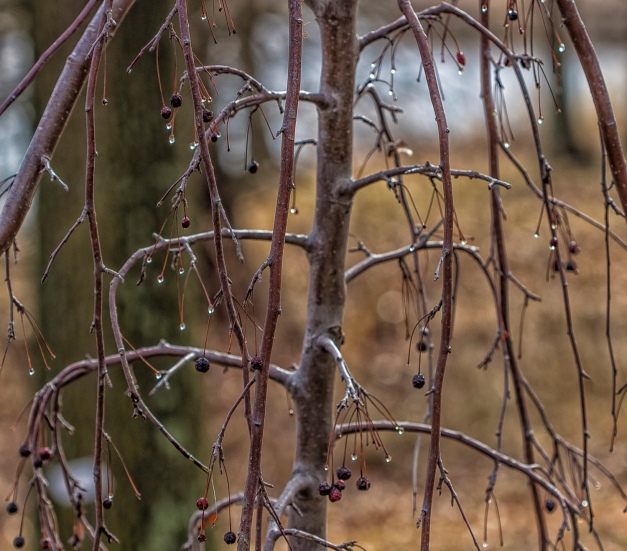

January Mist
By Sandra Fowler
Sometimes at night I hear small birds lament.
Dark notes that seem to second moon’s descent.
Cold is the color of a deep regret,
An etude perfected by winterset.
The world was music and it turned us round.
Stirred by the subtle atmospheric sound,
You gently sketched a snowflake on my face
Which shall be mine till light has left this place.
Such solace has the power to outlast time,
To lock a small bird’s elegy in rhyme.
Somewhere beyond the January mist,
The magic of our landscape still exists


 Maverick Mist