

“To hear never-heard sounds,
To see never-seen colors and shapes,
To try to understand the imperceptible
Power pervading the world;
To fly and find pure ethereal substances
That are not of matter
But of that invisible soul pervading reality.
To hear another soul and to whisper to another soul;
To be a lantern in the darkness
Or an umbrella in a stormy day;
To feel much more than know.
To be the eyes of an eagle, slope of a mountain;
To be a wave understanding the influence of the moon;
To be a tree and read the memory of the leaves;
To be an insignificant pedestrian on the streets
Of crazy cities watching, watching, and watching.
To be a smile on the face of a woman
And shine in her memory
As a moment saved without planning.”
― Dejan Stojanovic, Task of a Poet


Geneva Saar Ágústsson: Labeled Autistic
Lezley Saar
"Image of the artist's autistic seven-year-old daughter Geneva as an adult Madonna, with a beautiful floral arrangement for the body, and a zipper across the mouth, symbolizing the silence of autism. Three small oranges hang above her head. Surrounding Geneva are images of trees, lakes, and mountains separated by white-washed pieces of wood."
Angel Surrounded by Paysans (excerpt)
~ Wallace Stevens ~
I am one of you and being one of you
Is being and knowing what I am and know.
Yet I am the necessary angel of earth,
Since, in my sight, you see the earth again,
Cleared of its stiff and stubborn, man-locked set
And, in my hearing, you hear its tragic drone
Rise liquidly in liquid lingerings,
Like watery words awash; like meanings said
By repetitions of half-meanings.


Shiva Nataraja, The Lord of Dance
South India, Tamil Nadu
Chola Dynasty (850–1278 c.e.), early 13th century
The dancing lord Shiva represents the constant process of creation, preservation and destruction of the tangible universe. We see him here in a dynamic pose with his leg raised, beginning his dance. Walk around the sculpture and notice how balanced and well-sculpted it is from all sides—a superb example of Chola workmanship.

Shiva stands upon a dwarf, intended to represent ignorance, which must be eliminated in order for a believer to be released from the eternal cycle of birth and death. In his upper hands he carries a drum that beats the rhythm of his dance, and fire, a symbol of transience and destruction.

The Bathers (1928)
John Steuart Curry
“John Steuart Curry’s The Bathers depicts nude farmers and farm boys cavorting in and around a cattle tank after another day of hard work. As the common meeting place for different ages of men, the tank serves as a visual metaphor for life itself, into which the two pre-pubescent boys have only begun to dive and through which the older, wiser farmer looking on at left has already passed. While youth and maturity occupy the margins of manly experience, the young men romping at right are immersed in it fully, a suggestion that they enjoy, however unconsciously, the prime of their lives. Curry elevated his mundane subject matter by adopting certain aspects of Italian Renaissance art, including the balanced composition and carefully modeled figures.
The Bathers is one of a group of paintings in which Curry examined farm life in his native Kansas. His interest in rural subjects was shared by Thomas Hart Benton from Missouri and Grant Wood from Iowa, with whom he became identified in the 1930s as leaders of the regionalist movement, part of a larger revolt against the perceived inordinate influence of European modern art on American culture.”

“Marsden Hartley’s Himmel appears like a night display of fireworks translated into paint on canvas and across the frame. The composition’s overlapping, abstract, colorful shapes are rooted in French Cubism’s motifs and palette. The concentric discs floating across the painting reveal Hartley’s knowledge of American Indian design. They also may relate to cockades that decorated the German military uniforms that Hartley saw while living in Berlin at the onset of World War I. The German words for heaven (Himmel) and hell (Hölle) frame two conical shapes that resemble Zuckertuete, colorful bags of candy given to German schoolchildren. Combining childhood themes with military references, Hartley suggests that war is a kind of game that may end in salvation or damnation.
In October 1914 the death in action of von Freyburg, with whom Hartley had developed a close relationship, inspired a new and more powerful series of paintings in which elements of German military regalia symbolized his lost friend. One of the greatest of these visual tributes, this composition is dominated by forms resembling exploding bombs or fireworks, and includes an equestrian monument to valor and the German words Himmel (Heaven) and Hölle (Hell) to allude to the dual natures of war and love.” — Nelson Atkins Museum of Art 🔸

Your inspiration this week is windows.

Use a window to frame your shot.

Show us what you see out the window from the place where you usually blog.

Use a window to give structure to your photo.

Or make a window itself your subject.
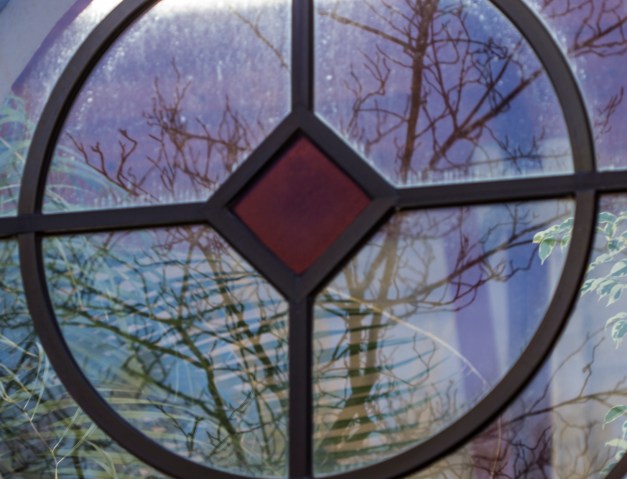
To get more creative, use the glass in a window to add texture to your photo.
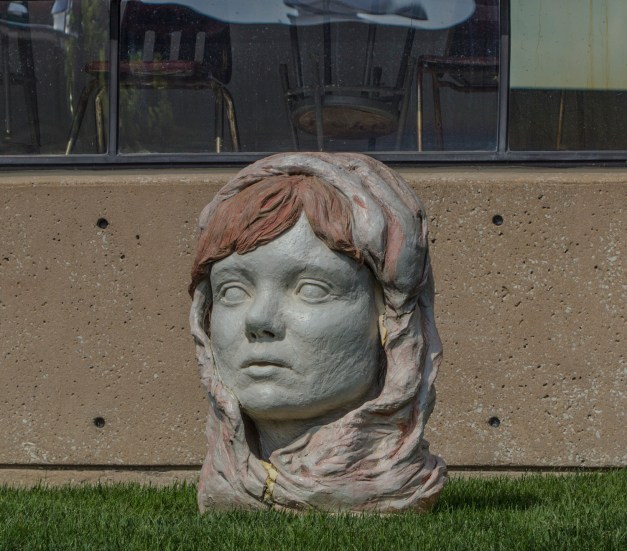
Share an image focused on someone’s eyes, or of a landscape
or piece of art that’s like a window to another world for you.
Words by Michelle Weber

“As a photographer you have a deep love for light, life and yourself. You know that the eyes of love aren’t blind, they are wide open. Only when your eye, heart and soul shine brighter than the sun, you realize how ordinary it is to love the beautiful, and how beautiful it is to love the ordinary.” ― Marius Vieth


Four Quartets, East Coker No. 2, 1,
T. S. Eliot
“In that open field
If you do not come too close, if you do not come too close,
On a summer midnight, you can hear the music
Of the weak pipe and the little drum
And see them dancing around the bonfire
The association of man and woman
In daunsinge, signifying matrimonie—
A dignified and commodiois sacrament.
Two and two, necessarye coniunction,
Holding eche other by the hand or the arm
Whiche betokeneth concorde. Round and round the fire
Leaping through the flames, or joined in circles,
Rustically solemn or in rustic laughter
Lifting heavy feet in clumsy shoes,
Earth feet, loam feet, lifted in country mirth
Mirth of those long since under earth
Nourishing the corn. Keeping time,
Keeping the rhythm in their dancing
As in their living in the living seasons
The time of the seasons and the constellations
The time of milking and the time of harvest
The time of the coupling of man and woman
And that of beasts. Feet rising and falling.
Eating and drinking. Dung and death.
Dawn points, and another day
Prepares for heat and silence. Out at sea the dawn wind
Wrinkles and slides. I am here
Or there, or elsewhere. In my beginning.”
 Maverick Mist