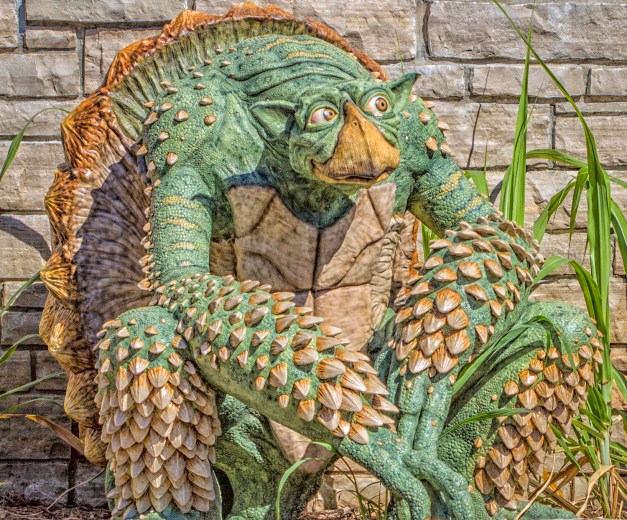
The Kappa is a creature in Japanese Folklore. In places where it is rumored to roam, warning signs have been placed to ward away children and tourists. Kappa’s are water demons with incredible elastic arms. They lure people to their pools and drown them to eat them. There are two ways to stop this demon from eating you. The only thing they love to eat more than human flesh (particularly the livers) are cucumbers. They even sneak out of their habitat just to get a cucumber. Just carve your name and birth date in a cucumber and when they eat it, they’ll have to leave you alone. Another way is to take advantage of the hollow in their head. This hollow contains water. This water gives them their power. If you find a way to make them bow, the water will spill out and he will be powerless. *
Photography

The Peace of Wild Things
by
Wendell Berry
When despair for the world grows in me
and I wake in the night at the least sound
in fear of what my life and my children's lives may be,
I go and lie down where the wood drake
rests in his beauty on the water, and the great heron feeds.
I come into the peace of wild things
who do not tax their lives with forethought
of grief. I come into the presence of still water.
And I feel above me the day-blind stars
waiting with their light. For a time
I rest in the grace of the world, and am free.

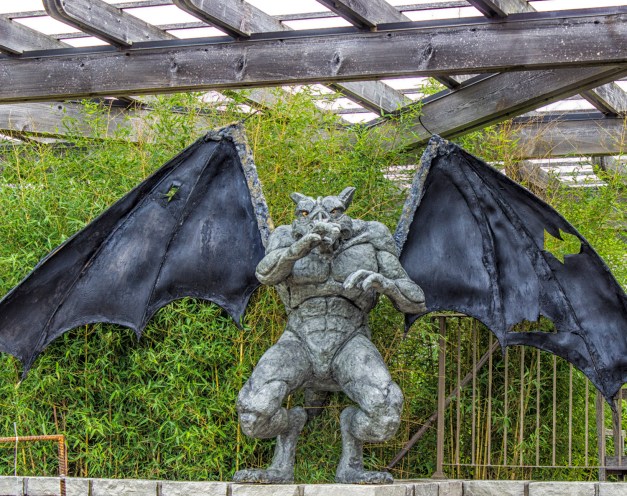
"The ancient Egyptians, Greeks, Etruscans and Romans all used animal-shaped waterspouts. During the 12th century, when gargoyles appeared in Europe, the Roman Catholic Church was growing stronger and converting many new people. Most of the population at this time were illiterate, and therefore images were very important to convey ideas. Many early gargoyles depicted some version of a dragon, especially in France. In addition to serving as spouts for water, the gaping mouths of these gargoyles evoked the fearsome destructiveness of these legendary beasts, reminding the laity of the need for the church's protection." -- Gargoyle-Wikipedia

There is a flower that Bees prefer—
And Butterflies—desire—
To gain the Purple Democrat
The Humming Bird—aspire—
And Whatsoever Insect pass—
A Honey bear away
Proportioned to his several dearth
And her—capacity—
Her face be rounder than the Moon
And ruddier than the Gown
Or Orchis in the Pasture—
Or Rhododendron—worn—
She doth not wait for June—
Before the World be Green—
Her sturdy little Countenance
Against the Wind—be seen—
Contending with the Grass—
Near Kinsman to Herself—
For Privilege of Sod and Sun—
Sweet Litigants for Life—
And when the Hills be full—
And newer fashions blow—
Doth not retract a single spice
For pang of jealousy—
Her Public—be the Noon—
Her Providence—the Sun—
Her Progress—by the Bee—proclaimed—
In sovereign—Swerveless Tune—
The Bravest—of the Host—
Surrendering—the last—
Nor even of Defeat—aware—
What cancelled by the Frost—

"Life and the world, or whatever we call that which we are and feel, is an astonishing thing. The mist of familiarity obscures from us the wonder of our being. We are struck with admiration at some of its transient modifications, but it is itself the great miracle."
-- Percy Bysshe Shelley

Summer-Haiku
Leonard Cohen
from “The Spice-Box of Earth”
For Frank and Marian Scott
Silence
and a deeper silence
when the crickets
hesitate


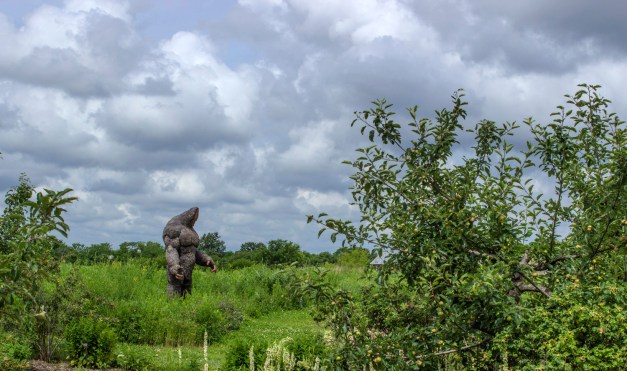
“The name “Bigfoot” for the creature appeared in the late 19th century. Spotted Elk, also called Chief Big Foot, was a well-known Lakota leader killed during the Wounded Knee Massacre in 1890. Famous in his time, his name likely inspired the name of two fabled attacking bears. In the late 19th and early 20th centuries at least two enormous marauding grizzly bears nicknamed “Bigfoot” were widely noted in the press, perhaps inspiring the common name of the ape-creature and may be a source of confusion in early stories.” Bigfoot (also known as Sasquatch). 👣

"Whether poised at a river bend or cruising the coastline with slow, deep wingbeats, the Great Blue Heron is a majestic sight. This stately heron with its subtle blue-gray plumage often stands motionless as it scans for prey or wades belly deep with long, deliberate steps. They may move slowly, but Great Blue Herons can strike like lightning to grab a fish or snap up a gopher. In flight, look for this widespread heron’s tucked-in neck and long legs trailing out behind." [Source]

High from the earth I heard a bird
By Emily Dickinson
High from the earth I heard a bird,
He trod upon the trees
As he esteemed them trifles,
And then he spied a breeze,
And situated softly
Upon a pile of wind
Which in a perturbation
Nature had left behind.
A joyous going fellow
I gathered from his talk
Which both of benediction
And badinage partook.
Without apparent burden
I subsequently learned
He was the faithful father
Of a dependent brood.
And this untoward transport
His remedy for care.
A contrast to our respites.
How different we are!

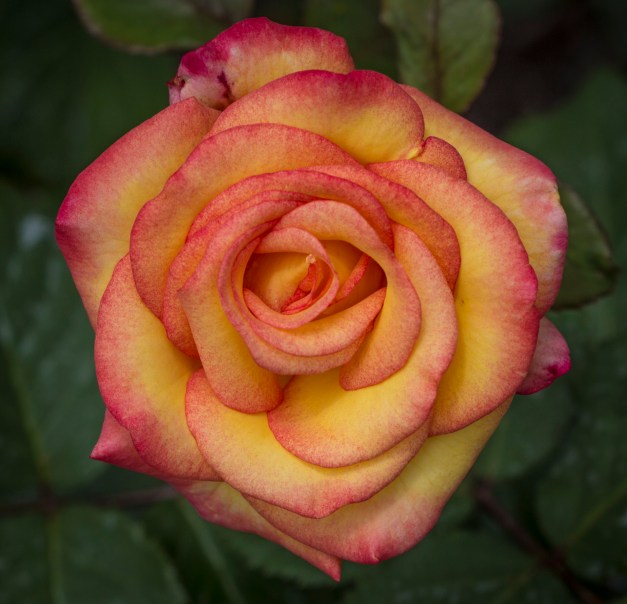
The Fragrance of the Rose
The disciples were absorbed in a discussion of Lao-tzu’s dictum:
“Those who know, do not say;
Those who say, do not know.”
When the master entered,
they asked him what the words meant.
Said the master, “Which of you knows the fragrance of a rose?”
All of them indicated that they knew.
Then he said, “Put it into words.”
All of them were silent.