Aradan ~
Posted by Maverick ~ on October 29, 2018
Posted in: Art, Music, Nature, Photography.
Tagged: Aradan, Autumn Hiatus, Bad Company, Break, Canadian geese, flying, seagull, Vacation.
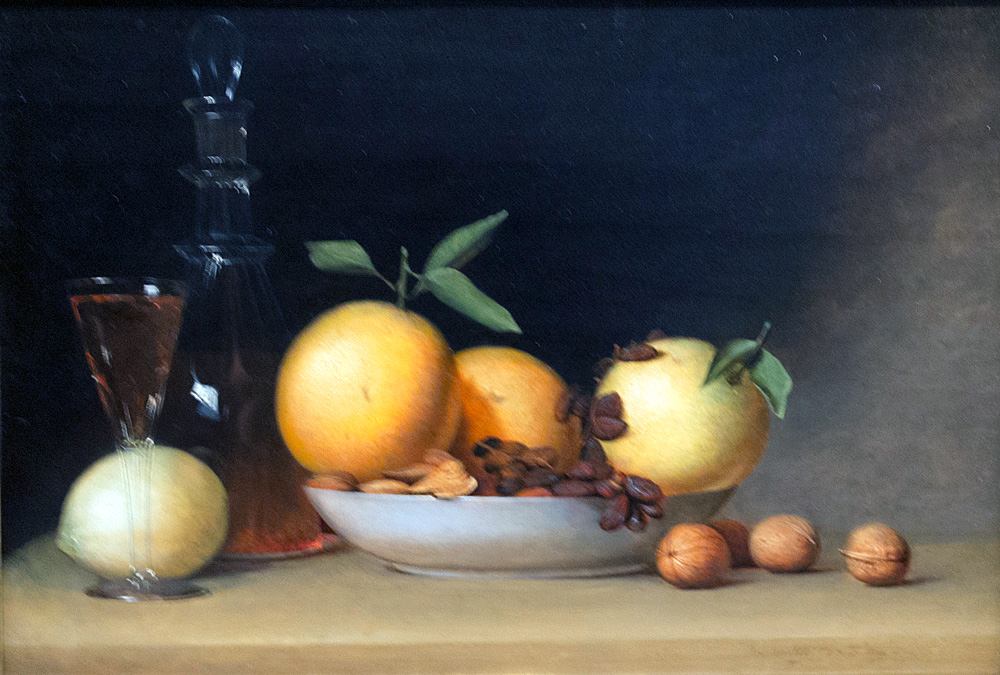
Still Life with Liqueur and Fruit, 1814
Raphaelle Peale
American, 1774–1825
Oil on panel
Still Life with Liqueur and Fruit is an exceptional early example of Raphaelle Peale’s “dining room pictures” and is one of only some 50 examples known today. The artist’s still lifes were considered extraordinary long before the vogue for still life took hold later in the century.

Delicacies from far-off origins, associated with the types of desserts offered in well-to-do households, are presented here in tempting detail. The meticulously rendered textures and skillfully executed reflections underscore Peale’s interest in scientific naturalism. The flawlessly balanced composition speaks to the desire in the early Republic for rational order, although the suggestion of extravagance simmers just below the surface.
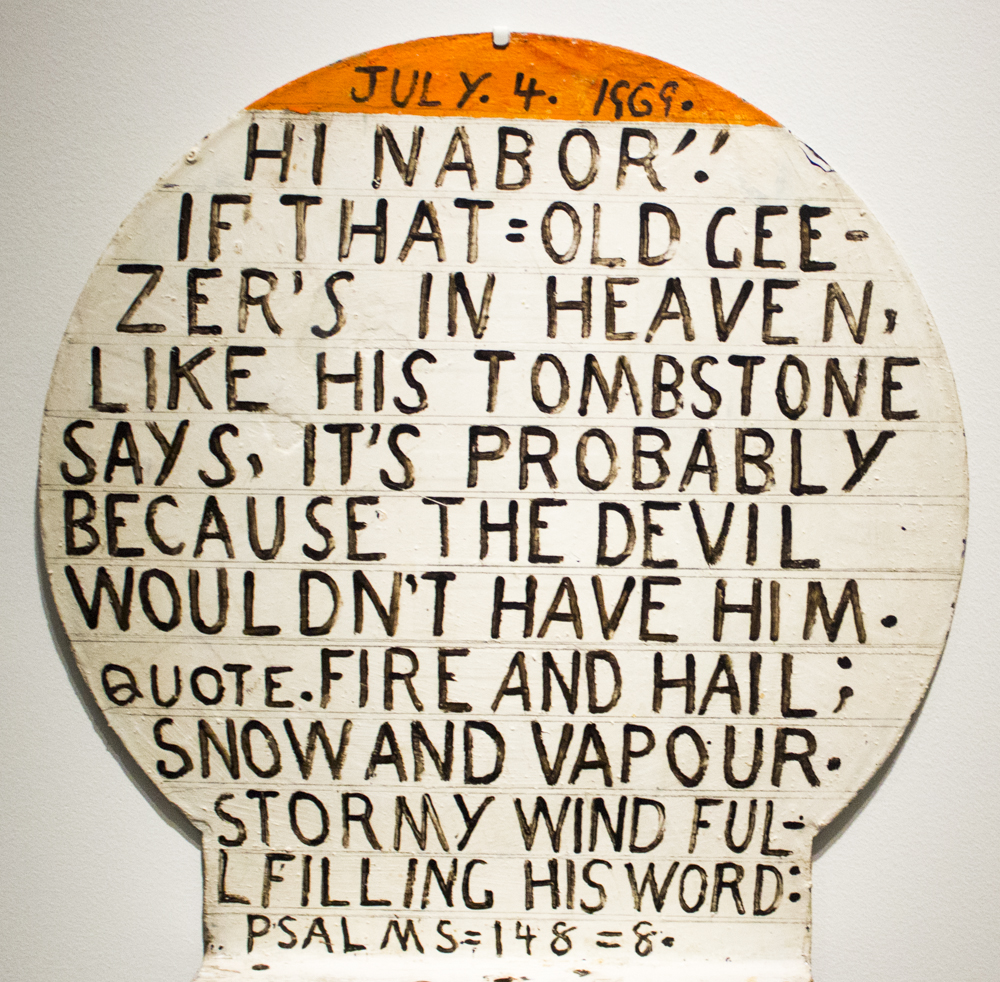
Jesse Howard
Paint on enamel and metal
JULY.4.1969. HI NABOR’! IF THAT = OLD GEE – ZER’S IN HEAVEN, LIKE HIS TOMBSTONE SAYS, IT’S PROBABLY BECAUSE THE DEVIL WOULDN’T HAVE HIM. QUOTE. FIRE AND HAIL. SNOW AND VAPOUR. STORMY WIND FUL-LFILLING HIS WORD: PSALMS=148=8.
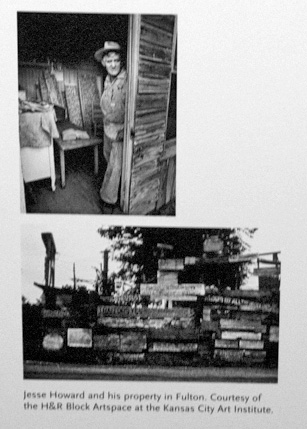
The self-taught artist and social activist Jesse Clyde Howard was an adamant defender of First Amendment rights. Hundreds of sign sculptures like this one once filled his property in Fulton, Missouri. Ranging from confessions to angry accusations, these signs demonstrate Howard’s belief in free thought and free speech. His “text messages” may be appreciated for their aesthetic qualities as well. The bold, black lettering and stark white background create an arresting abstract visual arrangement.
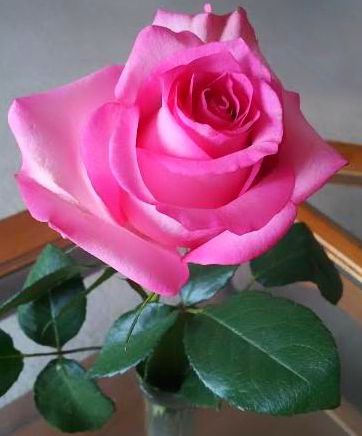
What was said to the Rose
What was said to the rose that made it open was said
to me here in my chest.
What was told the cypress that made it strong
and straight, what was
whispered the jasmine so it is what it is, whatever made
sugarcane sweet, whatever
was said to the inhabitants of the town of Chigil in
Turkestan that makes them
so handsome, whatever lets the pomegranate flower blush
like a human face, that is
being said to me now. I blush. Whatever put eloquence in
language, that’s happening here.
The great warehouse doors open; I fill with gratitude,
chewing a piece of sugarcane,
in love with the one to whom every that belongs!
~ Mevlana Jalaluddin Rumi
‘Rumi the Book of Love – poems of ecstasy and longing’.
Translated by Coleman Barks

Once in the dream of a night I stood
Lone in the light of a magical wood,
Soul-deep in visions that poppy-like sprang;
And spirits of Truth were the birds that sang,
And spirits of Love were the stars that glowed,
And spirits of Peace were the streams that flowed
In that magical wood in the land of sleep.
Excerpt from: Song of a Dream
Sarojini Naidu
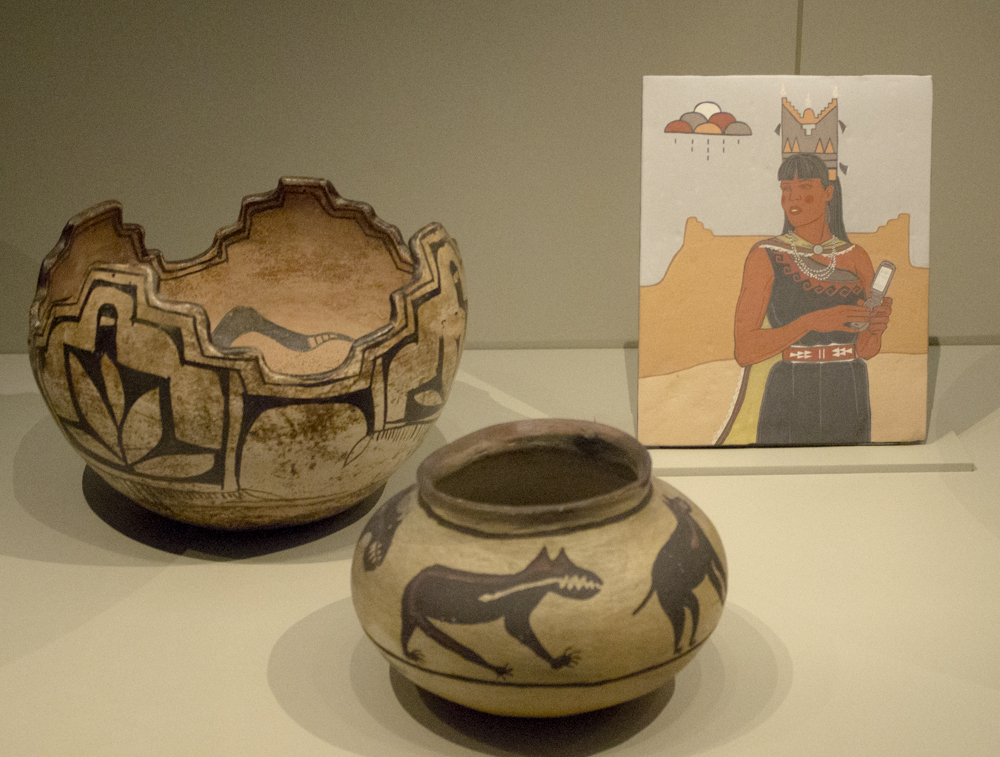
Prayer bowl, Cochini, New Mexico ca. 1820, and Jar, Hopi Arizona ca. 1890
Clay and pigment
"This mysterious little jar is painted with the image of four bears, a representation rarely found in Hopi ceramics. Each animal has a heartline -- the line running from the mouth to the chest, terminating in the area of the heart. Other features, such as teeth and claws, are emphasized. The use of this jar is unknown; it may have had a ceremonial function or may have been made for sale to outsiders who were visiting Hopi villages in ever increasing numbers during the last decades of the 19th century."
🐻

Teaching a Mustang Pony to Pack Dead Game, ca. 1890
Frederic Remington
American, 1861-1909
Oil on canvas
Growing up in upstate New York, Frederic Remington became entranced by the American West, a place he imagined filled with cowboys, Indians and adventure. Following a trip in 1881 into the Montana Territory, he temporarily adopted the life of a cowboy and began making art that reinforced nostalgic fantasies about the frontier West, which was declared exhausted by the 1890 census.

Teaching a Mustang Pony to Pack Dead Game focuses on cowboys attempting to force a pony to overcome its innate fear of a dead antelope. Remington painted the dynamic black-and-white composition to be an engraved illustration in the August 16, 1890, issue of Harper's Weekly.

“Inside of us, there’s a continual autumn.
Our leaves fall and are blown out over the water.”
Rumi

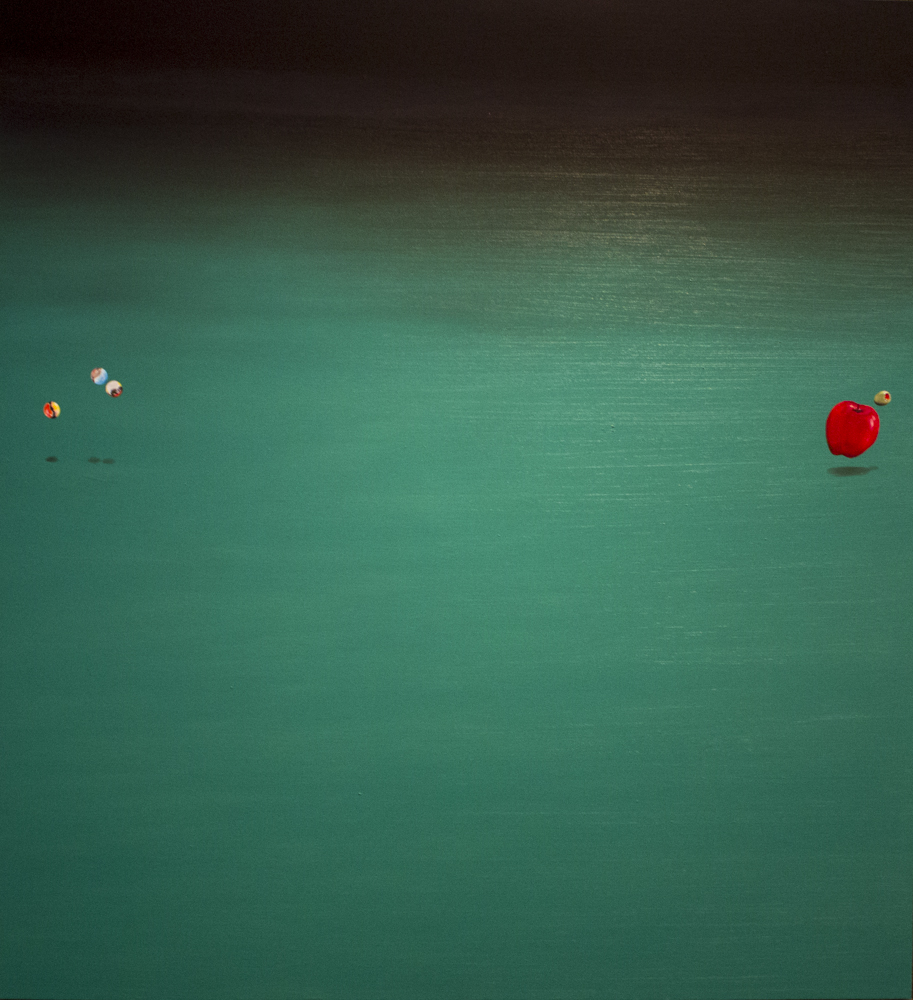
Bouncing Marbles, Bouncing Apple, Bouncing Olive
Edward Ruscha
Oil on canvas
"In Bouncing Marbles, Bouncing Apple, Bouncing Olive, Edward Ruscha explores an obscure language of visual relationships. He divorces the objects depicted from their everyday contexts by placing them within an infinite, surreal space. The relationships that exist among the marbles, apples and olive are equally interpretations. The marbles might refer to childhood, the olive to hors d'oeuvres and martinis and the apple to the Fall of Adam and Eve. Such a reading makes this a meditation on the loss of innocence. Alternatively, Ruscha may have constructed a playful dialog among round forms or a treatise on Newton's law."
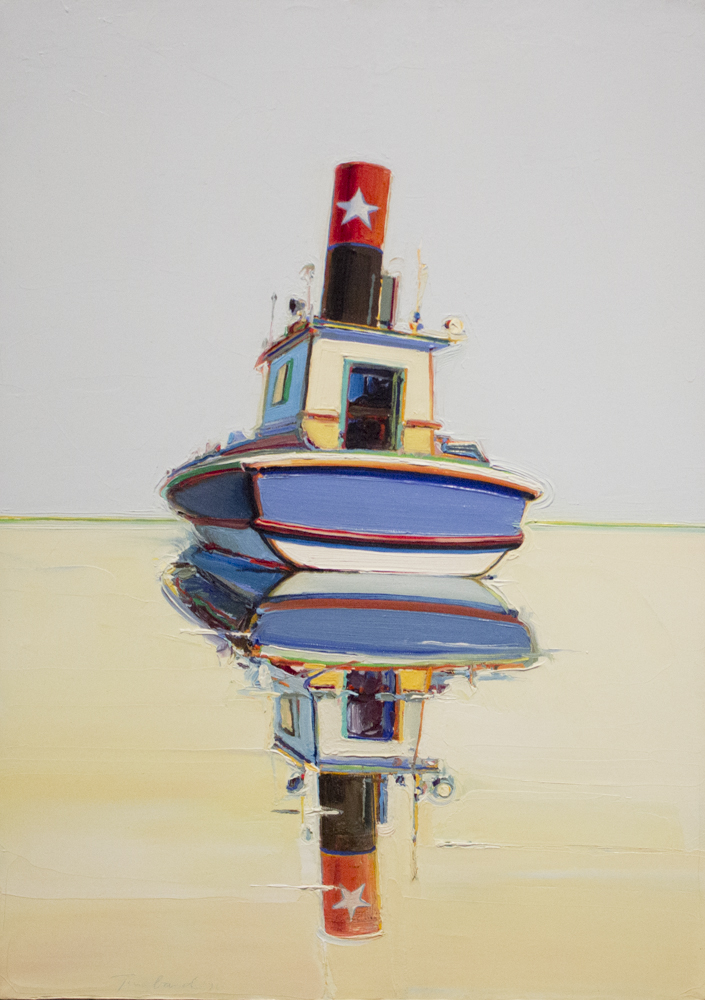
Starboat (Tugboat and Riverboat) 1966
Wayne Thiebaud
Oil on canvas
Starboat (Tugboat and Riverboat) is painted with Thiebaud's characteristic sensuous colors and thick impasto. The boat and its reflection are rendered with delicate brush strokes. Sea and sky, boldly defined by a yellow and green horizon line, are laid out in broad swaths with a palette knife. While Thiebaud's work has been associated with Pop art because of its focus on the everyday objects of popular culture, he sees it as part of a long realist tradition.

 Maverick Mist