
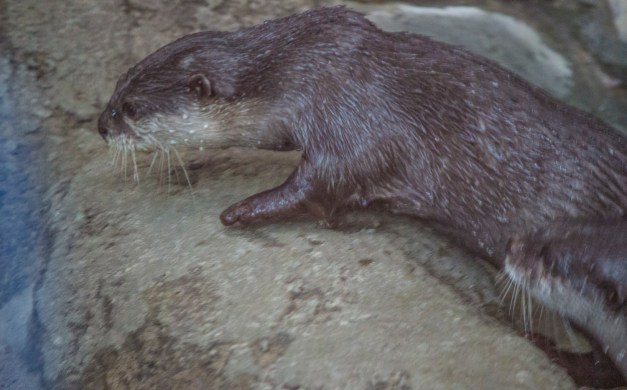
“Some birds lay eggs early in the season, some later, but the crane is the last to hatch. When the young ducks and geese were flying away to a warmer country, the young crane was still too weak to fly. Winter was approaching. The mother-bird asked Otter to keep the bird for her during the winter; in return she would reward her in the spring. Otter kept her ward in a warm hole. Once Osni’ (Cold) came to the camp, killed Otter, and carried off the young crane to his home, where he made him stir the fire for him with his bill. He was never allowed to go anywhere else. He was starving and became ugly; the fire burnt his back, so that the crane’s skin is of a reddish-brown color now. In the spring, when the south side of the hills was warm while the northern side was still frozen, the young crane knew his mother would return soon. He went into the sunshine and called her. He continued to do so later in the spring. Osni’ cried, “Come in here, stop that noise, my grandson.” The crane cried all the louder. Osni’ pursued him and nearly caught him, when suddenly a clap of thunder was heard and the lightning struck Osni’ and tore him to pieces. The Crane was there, and asked her young one how he had been treated during the winter. He told her that Otter had treated him well, while Osni’ had abused him. The old bird looked for another otter, and said to him, “Henceforth the cold (osni’) will never kill you.” Thus she paid the Otter for his services. This is why the Otter can live in the water throughout winter without freezing.” — from The Assiniboine by Robert Harry Lowie


 Maverick Mist