
“Why is love rich beyond all other possible human experiences and a sweet burden to those seized in its grasp? Because we become what we love and yet remain ourselves.” — Martin Heidegger
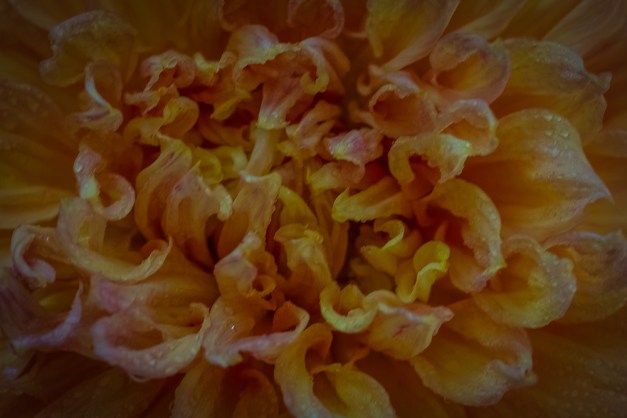
“Why is love rich beyond all other possible human experiences and a sweet burden to those seized in its grasp? Because we become what we love and yet remain ourselves.” — Martin Heidegger

Among silent breakers, the tremors of the shining surface, in the swift flux and reflux martyrizing the patches of light, in the rendings of luminous loops and arcs, and lines, in the occultations and reappearances of dancing bursts of light being decomposed, recomposed, contracted, spread out, only to be re-distributed once more before me, with me, within me, drowned, and unendurably buffeted, my calm violated a thousand times by the tongues of infinity, oscillating, sinusoidally overrun by the multitude of liquid lines. enormous with a thousand folds, I was and I was not, I was caught, I was lost, I was in a state of complete ubiquity. The thousands upon thousands of rustlings were my own thousand shatterings.” ― Henri Michaux, Miserable Miracle


A Song of Spring and Autumn
Francis Turner Palgrave
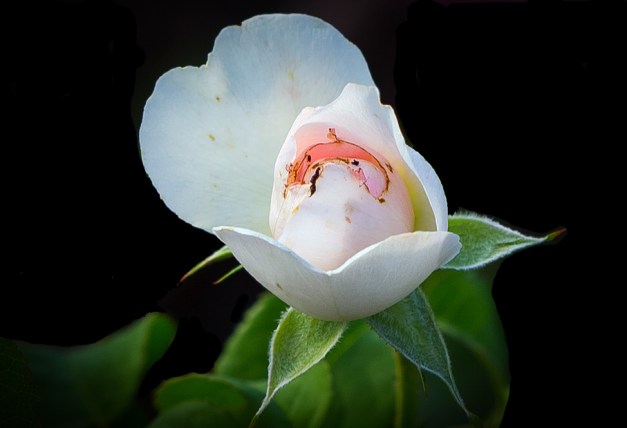
IN the season of white wild roses
We two went hand in hand:
But now in the ruddy autumn
Together already we stand.
O pale pearl-necklace that wandered
O’er the white-thorn’s tangled head!
The white-thorn is turned to russet,
The pearls to purple and red!
On the topmost orchard branches
It then was crimson and snow,
Where now the gold-red apples
Burn on the turf below.
And between the trees the children
In and out run hand in hand;
And, with smiles that answer their smiling,
We two together stand.
Fall, leaves, fall
by Emily Brontë
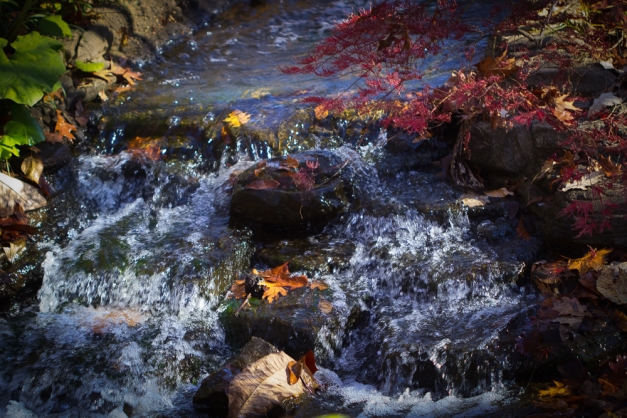
Fall, leaves, fall; die, flowers, away;
Lengthen night and shorten day;
Every leaf speaks bliss to me
Fluttering from the autumn tree.
I shall smile when wreaths of snow
Blossom where the rose should grow;
I shall sing when night’s decay
Ushers in a drearier day.


The peacock is a symbol of immortality because the ancients believed that the peacock had flesh that did not decay after death. As such, early Christian paintings and mosaics use peacock imagery, and peacock feathers can be used during the Easter season as church decorations. This symbol of immortality is also directly linked to Christ. The peacock naturally replaces his feathers annually; as such, the peacock is also a symbol of renewal.
In Greco-Roman mythology the Peacock is identified with Hera (Juno) who created the Peacock from Argus whose hundred eyes (seen on the tail feathers of the Peacock) symbolize the vault of heaven and the “eyes” of the stars.
The peacock is associated with the Hindu deity that represents benevolence, patience, kindness, compassion, and luck. It is also the national bird of India.
In Babylonia and Persia the Peacock is seen as a guardian to royalty.
In Japan, the peacock is associated with an emblem of love, compassionate watchfulness, good will, nurturing, and kind-heartedness.

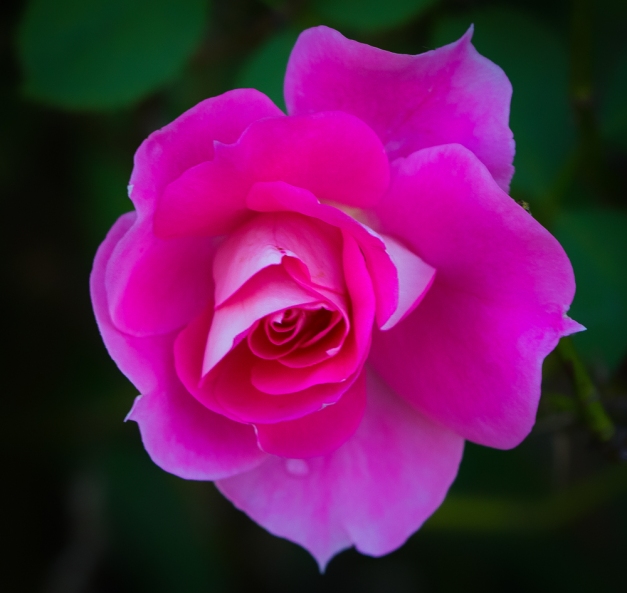
“I like not only to be loved, but also to be told that I am loved.
I am not sure that you are of the same kind.
But the realm of silence is large enough beyond the grave.
This is the world of literature and speech
and I shall take leave to tell you that you are very dear.”

Vulture
Robinson Jeffers
I had walked since dawn and lay down to rest on a bare hillside
Above the ocean. I saw through half-shut eyelids a vulture wheeling
high up in heaven,
And presently it passed again, but lower and nearer, its orbit
narrowing,
I understood then
That I was under inspection. I lay death-still and heard the flight-
feathers
Whistle above me and make their circle and come nearer.
I could see the naked red head between the great wings
Bear downward staring. I said, ‘My dear bird, we are wasting time
here.
These old bones will still work; they are not for you.’ But how
beautiful
he looked, gliding down
On those great sails; how beautiful he looked, veering away in the
sea-light
over the precipice. I tell you solemnly
That I was sorry to have disappointed him. To be eaten by that beak
and
become part of him, to share those wings and those eyes–
What a sublime end of one’s body, what an enskyment; what a life
after death.


 Maverick Mist