“What we wish, we readily believe, and what we ourselves think, we imagine others think also.”
Julius Caesar

“What we wish, we readily believe, and what we ourselves think, we imagine others think also.”
Julius Caesar

 “Art should comfort the disturbed and disturb the comfortable.” ―Banksy
██
√v^√v^√♥
He was crippled,
But only his body was cracked.
It’s not simple,
Nor is an easy matter to explain.
Lets just leave it at that she says,
And closes the holy book of lies.
She covers her eyes, denying to herself
What she thought happened.
The Book of Lies

“Never seek to tell thy love,
Love that never told can be;
For the gentle wind does move
Silently, invisibly.
William Blake


“If the day and night be such that you greet them with joy, and life emits a fragrance like flowers and sweet-scented herbs, is more elastic, more immortal — that is your success. All nature is your congratulation, and you have cause momentarily to bless yourself.” – Henry David Thoreau, Walden

It’s not what you look at that matters, it’s what you see. – Henry David Thoreau
Leanne Cole and Laura Macky’s weekly Monochrome Madness will be posted later today for your viewing pleasure on Leanne’s blog. If you would like to participate and submit a photo in the coming weeks, please email your monochrome image to leanne@leannecole.com.au and include a link to your blog or website if you have one. It doesn’t have to be WordPress blogger, it can be a Facebook page, a Flickr page, etc. Include your name or your blog name. The image size should be low resolution, so the largest size should be 1000 pixels or less. The deadline for submission is before 6 p.m. on or before Tuesday, Melbourne Australia time. The earlier the better for Leanne. If you should miss the deadline your photograph will be posted the following week. The complete instructions are posted on Leanne’s blog should you have any questions or need help.
⑤ ۞ ③

“Adopt the pace of nature: her secret is patience.” — Ralph Waldo Emerson
* The first noted cultivation of the crocus flower was said to have occurred in regions of the Mediterranean, mostly in the area of Crete. But the Greek affinity for the crocus flower likely started well before its commercial harvesting began, as these plants appear in many pieces of myth. In one story, the mortal Krokus began an affair with a beautiful nymph named Smilax. Krokus became bored of his nymph and began to wander. To punish him for his infidelity, the gods turned Krokus into the immobile crocus flower. An alternative version of this story tells of Krokus becoming so enamored with Smilax that the gods granted them both immortality by turning them into two crocus flowers growing in the same field. Yet another myth states that on one spring day the god Zeus made love to Hera on a river bank. It is said that the heat of their passion caused the earth to shake, thus causing the bank to burst forth with stunning purple and white crocus flowers. In addition to being the focus of several Greek myths, crocuses have also become the inspiration to a number of artists. These blossoms have found their way into the paintings of many modern artists – from the striking realism of Glen Loates’ “Crocus,” to the unusual, colorful work of Nancy Nuce’s “Spring Crocuses.”Symbolically, the crocus flower tends to represent gladness and cheerfulness, as well as a sense of youthful, innocent joy. As a gift, these flowers are often given to represent that same joy – to express a passion for life. They are also given as thank you gifts, or tokens of friends – as if to say, “I am glad that you are in my life.”
*Source: Crocus Flowers
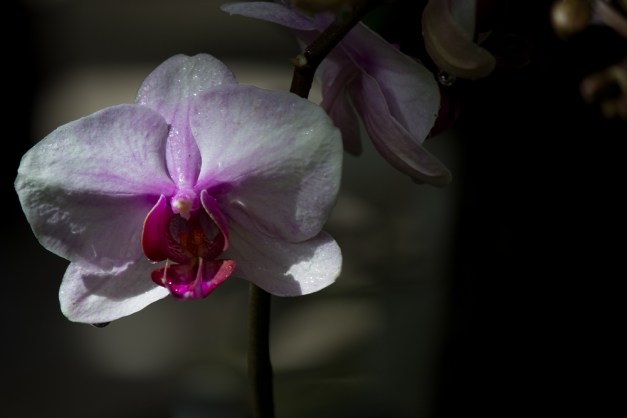
The glow around your face
When you see the lightning race
I know I’m very near
And I can hear the thunder
A woman of perplexity
A woman for eternity
A woman of the land
A woman for a man
I’m down on my knees
And I’m saying: “Please believe me”
It’s hard to fall out of love completely
It’s harder to find a way to come back discretely
To speak of things anew
To weep in quiet blue
Brocade upon your bed
Memories should fade, at least of you
A sceptor of ice and fire
The spectre of my desire
A girl child of such loveliness
A woman of my emptiness
A woman of fame, renown
A woman who kicks the clown
A woman of the land
A woman for a man
Woman – Shawn Phillips
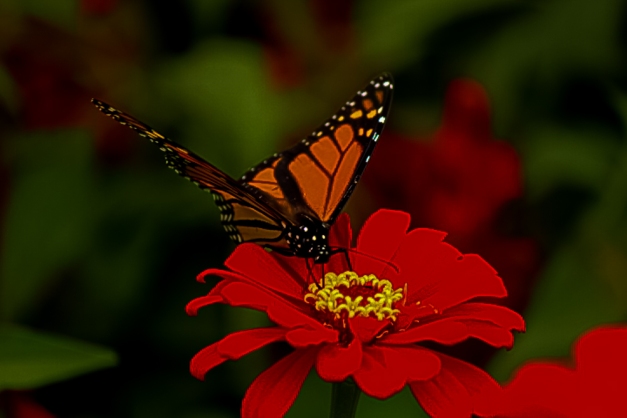
“Whoever said orange is the new pink is seriously disturbed.” – Elle Woods – Legally Blonde









Butterfly Still at Risk of Extinction
Favorable Weather Boosts Population But Pesticides Still Threaten Butterfly’s Chance of Survival
The annual overwintering count of monarch butterflies released today shows a modest population rebound from last year’s lowest-ever count of 34 million butterflies, but is still the second lowest population count since surveys began in 1993. The population was expected to be up this winter due to favorable spring and summer weather conditions in the monarch’s U.S. and Canadian breeding areas, as butterfly populations fluctuate widely with changing weather. But the 56.5 million monarchs currently gathered in Mexico for the winter still represents a population decline of 82 percent from the 20-year average — and a decline of 95 percent from the population highs in the mid-1990s. This year’s population was expected to be much larger due to nearly perfect climate conditions during the breeding season.

“The population increase is welcome news, but the monarch must reach a much larger population size to be able to bounce back from ups and downs, so this much-loved butterfly still needs Endangered Species Act protection to ensure that it’s around for future generations,” said Tierra Curry, a senior scientist at the Center for Biological Diversity.

Found throughout the United States during summer months, most monarchs from east of the Rockies winter in the mountains of central Mexico, where they form tight clusters on trees. Scientists from World Wildlife Fund Mexico estimate the population size by counting the number of hectares of trees covered by monarchs. Monarchs need a very large population size to be resilient to threats from severe weather events, pesticides, climate change, disease and predation. A single winter storm in 2002 killed an estimated 500 million monarchs, more than eight times the size of the current population even with this year’s boost.  ƸӜƷ
Full press release — The Xerces Society
 Maverick Mist