
There’s a bluebird in my heart that wants to get out. — Charles Bukowski


Love’s Philosophy
by Percy Bysshe Shelley
The fountains mingle with the river,
And the rivers with the ocean;
The winds of heaven mix forever,
With a sweet emotion;
Nothing in the world is single;
All things by a law divine
In one another’s being mingle;–
Why not I with thine?
See! the mountains kiss high heaven,
And the waves clasp one another;
No sister flower would be forgiven,
If it disdained it’s brother;
And the sunlight clasps the earth,
And the moonbeams kiss the sea;–
What are all these kissings worth,
If thou kiss not me?

One Art
Elizabeth Bishop
The art of losing isn’t hard to master;
so many things seem filled with the intent
to be lost that their loss is no disaster.
Lose something every day. Accept the fluster
of lost door keys, the hour badly spent.
The art of losing isn’t hard to master.
Then practice losing farther, losing faster:
places, and names, and where it was you meant
to travel. None of these will bring disaster.
I lost my mother’s watch. And look! my last, or
next-to-last, of three loved houses went.
The art of losing isn’t hard to master.
I lost two cities, lovely ones. And, vaster,
some realms I owned, two rivers, a continent.
I miss them, but it wasn’t a disaster.
—Even losing you (the joking voice, a gesture
I love) I shan’t have lied. It’s evident
the art of losing’s not too hard to master
though it may look like (Write it!) like disaster.

To M —
by Edgar Allen Poe
O! I care not that my earthly lot
Hath little of Earth in it,
That years of love have been forgot
In the fever of a minute:
I heed not that the desolate
Are happier, sweet, than I,
But that you meddle with my fate
Who am a passer by.
It is not that my founts of bliss
Are gushing- strange! with tears-
Or that the thrill of a single kiss
Hath palsied many years-
‘Tis not that the flowers of twenty springs
Which have wither’d as they rose
Lie dead on my heart-strings
With the weight of an age of snows.
Not that the grass- O! may it thrive!
On my grave is growing or grown-
But that, while I am dead yet alive
I cannot be, lady, alone.

American Pie
Don McLean
I went down to the sacred store
Where I’d heard the music years before
But the man there said the music wouldn’t play
And in the streets the children screamed
The lovers cried and the poets dreamed
But not a word was spoken
The church bells all were broken
And the three men I admire most
The Father, Son and Holy Ghost
They caught the last train for the coast
The Day the Music Died.
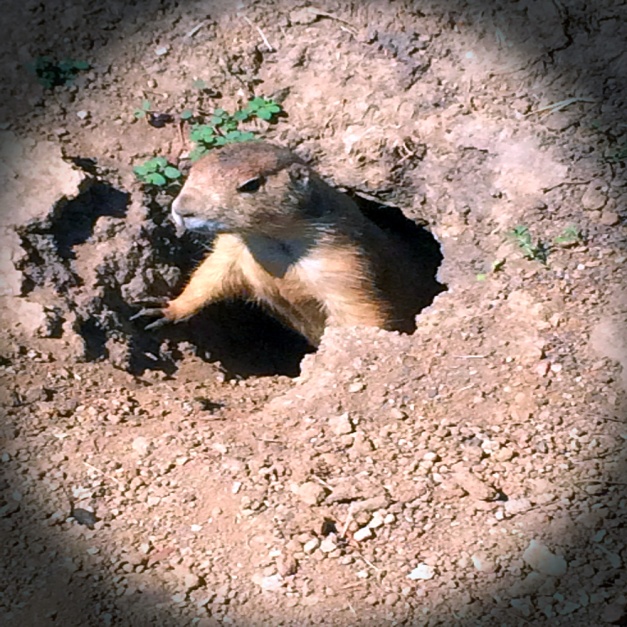
“The Groundhog”
Richard Eberhart
In June, amid the golden fields,
I saw a groundhog lying dead.
Dead lay he; my senses shook,
And mind outshot our naked frailty.
There lowly in the vigorous summer
His form began its senseless change,
And made my senses waver dim
Seeing nature ferocious in him.
Inspecting close maggots’ might
And seething cauldron of his being,
Half with loathing, half with a strange love,
I poked him with an angry stick.
The fever arose, became a flame
And Vigour circumscribed the skies,
Immense energy in the sun,
And through my frame a sunless trembling.
My stick had done nor good nor harm.
Then stood I silent in the day
Watching the object, as before;
And kept my reverence for knowledge
Trying for control, to be still,
To quell the passion of the blood;
Until I had bent down on my knees
Praying for joy in the sight of decay.
And so I left; and I returned
In Autumn strict of eye, to see
The sap gone out of the groundhog,
But the bony sodden hulk remained
But the year had lost its meaning,
And in intellectual chains
I lost both love and loathing,
Mured up in the wall of wisdom.
Another summer took the fields again
Massive and burning, full of life,
But when I chanced upon the spot
There was only a little hair left,
And bones bleaching in the sunlight
Beautiful as architecture;
I watched them like a geometer,
And cut a walking stick from a birch.
It has been three years, now.
There is no sign of the groundhog.
I stood there in the whirling summer,
My hand capped a withered heart,
And thought of China and of Greece,
Of Alexander in his tent;
Of Montaigne in his tower,
Of Saint Theresa in her wild lament.

Sailing To Byzantium
William Butler Yeats
I
That is no country for old men. The young
In one another’s arms, birds in the trees
—Those dying generations—at their song,
The salmon-falls, the mackerel-crowded seas,
Fish, flesh, or fowl commend all summer long
Whatever is begotten, born, and dies.
Caught in that sensual music all neglect
Monuments of unaging intellect.
II
An aged man is but a paltry thing,
A tattered coat upon a stick, unless
Soul clap its hands and sing, and louder sing
For every tatter in its mortal dress,
Nor is there singing school but studying
Monuments of its own magnificence;
And therefore I have sailed the seas and come
To the holy city of Byzantium.
III
O sages standing in God’s holy fire
As in the gold mosaic of a wall,
Come from the holy fire, perne in a gyre,
And be the singing-masters of my soul.
Consume my heart away; sick with desire
And fastened to a dying animal
It knows not what it is; and gather me
Into the artifice of eternity.
IV
Once out of nature I shall never take
My bodily form from any natural thing,
But such a form as Grecian goldsmiths make
Of hammered gold and gold enamelling
To keep a drowsy Emperor awake;
Or set upon a golden bough to sing
To lords and ladies of Byzantium
Of what is past, or passing, or to come.
American Tune
by Paul Simon

What I Am Telling You
by Marina Gipps
Do you understand that moat of whiteness?
Where we said our I do’s lifted in a cloud of never.
Where blanched sheets covered our desires
of desktop plumes and smoked cigarettes.
Do you understand that moat of whiteness?
The one where I said what I would not have said.
Clouded it seems everyday as if changing.
For I am no more than a forgotten, rotten root.
Standing here beside what should have been-waiting.
Do you understand that moat of whiteness?
If I ask again tomorrow I won’t expect an answer.
Shan’t ask-yet shall continue to write until
that Oppressor stops hounding me with messages.
Do you understand that moat of whiteness?
Sometimes I see it through a window-willowing off.
Even hear its vague whisper in the tedium of darkness.
It tells me naughty might be nice-so it asks again,
Do you understand that moat of whiteness?
Why the birds kill you with their song in the early dawn.
Why the sun should never come up-so you may sleep.
Why the moon is forever a nuisance for the least serene.
Do you truly understand that moat of whiteness?

 Maverick Mist