
“I was born on the night of Samhain, when the barrier between the worlds is whisper-thin and when magic, old magic, sings its heady and sweet song to anyone who cares to hear it.”
― Carolyn MacCullough, Once a Witch
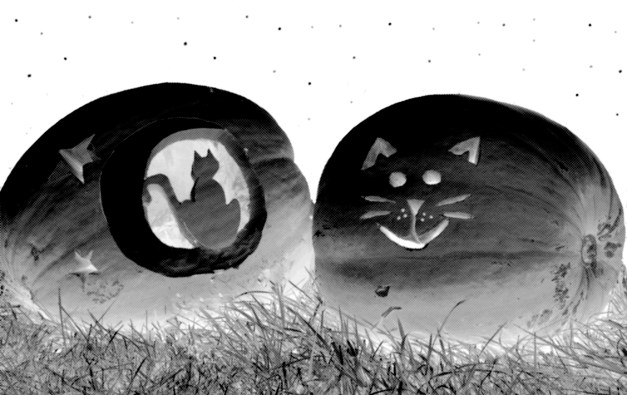

“I was born on the night of Samhain, when the barrier between the worlds is whisper-thin and when magic, old magic, sings its heady and sweet song to anyone who cares to hear it.”
― Carolyn MacCullough, Once a Witch

Pyramids at Gizeh (1929)
Oskar Kokoschka
"The famous Egyptian pyramids of Menkaure, Khafre, and Khufu rise against the deep blue sky at Gizeh (Giza). At center looms the giant Sphinx, while camels, horses, and people move about the golden desert sands.

After serving in the Austrian army during World War I (1914–1918), Oskar Kokoschka taught art and traveled widely. In the Middle East, he painted broad vistas of places he had learned of from the Bible and modern archaeology. The artist’s quick, sketchy brushstrokes contrast with the timelessness of his subject."

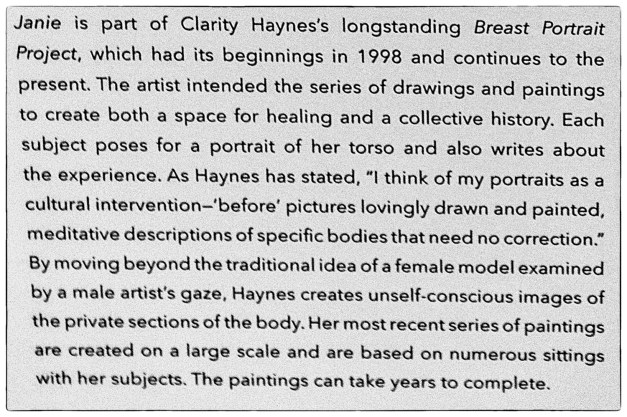
Clarity Haynes a Brooklyn-based painter, focuses on non-traditional images and ideas of womanhood, beauty, sexuality and gender expression.‘The Breast Portrait Project’ also explores illness, aging, mortality and the shifting nature of the body. Clarity explains: “I am interested in the many ways the body changes throughout a lifetime, and in the ways in which we create and change our bodies”. 🎀
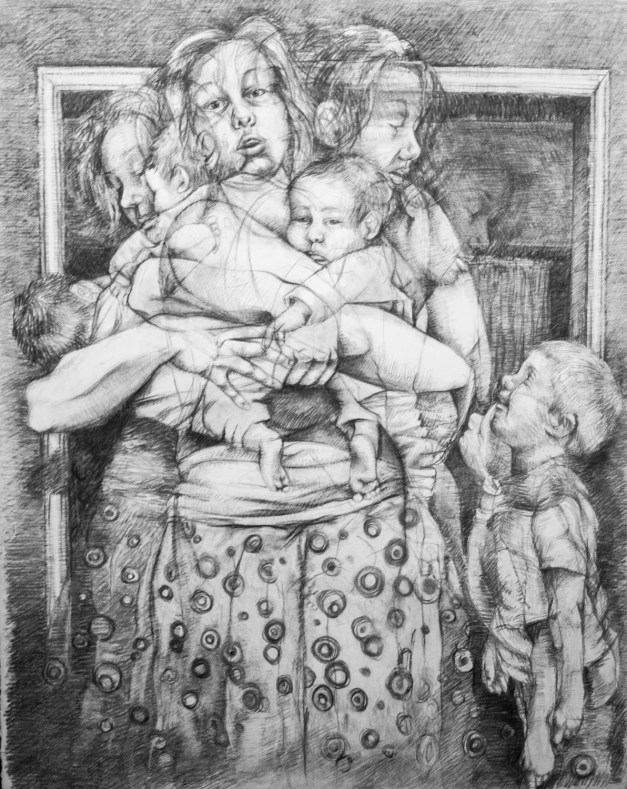
Rene Leighty’s exhibit, “The Reality of Motherhood,” depicts the changes that occur in a women’s body that come naturally when having children. The artist describes her artwork as contemporary, expressive, dramatic, personal, and more importantly, demonstrates the reality of motherhood. “I used repetitive lines and shapes to display an appearance of movement and merged together a layering of multiple images in graphite and charcoal,” said Leighty. “The process is similar to the triple exposure technique in photography, with a repetition of recognizable body parts and overlapping imagery in my descriptions of a hectic life.”
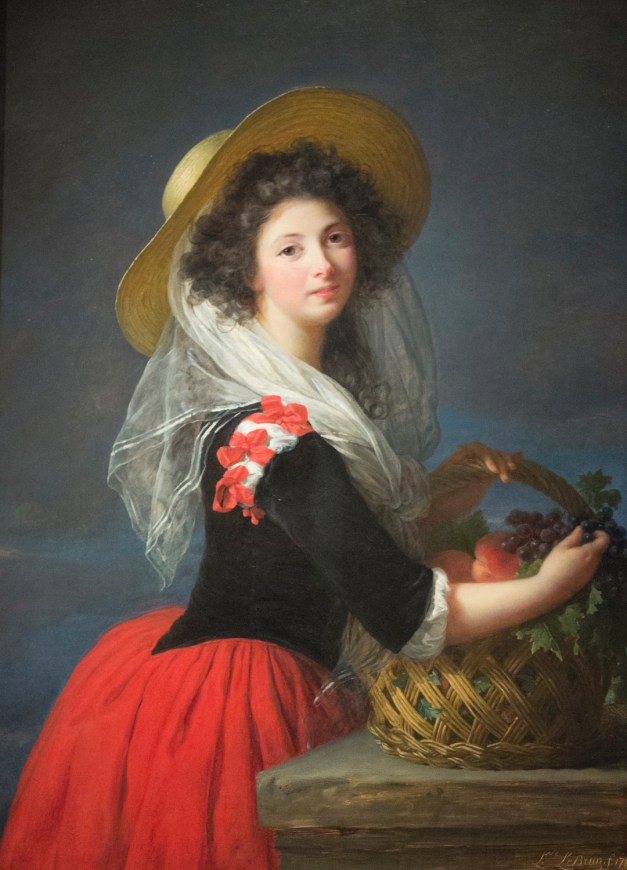
Marie Gabrielle de Gramont, Duchesse de Caderousse
Elisabeth-Louise Vigée Le Brun
Vigée Le Brun was one of the most popular portraitists of 18th-century Europe. Though her rapid rise to fame was both resisted and resented by jealous rivals, she became Painter to Queen Marie Antoinette of France, whom she first portrayed in 1778. This painting is one of a series of early masterpieces created by the artist in the decade prior to the Revolution. In terms of style and technique it is largely dependent on the example of the great Flemish artists of the 17th century, Rubens and Van Dyck, whose works Vigée Le Brun had studied in detail while traveling through the Low Countries in the early 1780s. The sitter's costume of red, black and white is based on that of the peasant women of Brittany--a precious affectation, on the part of a duchess, but one which was fashionable among the aristocracy at precisely this moment in French history. When the painting was first exhibited at the Salon of 1785, the Duchesse de Caderousse was an instant success with both critics and the public. One of the artist's most celebrated works, it remained in the possession of the sitter's descendants until November 1984.
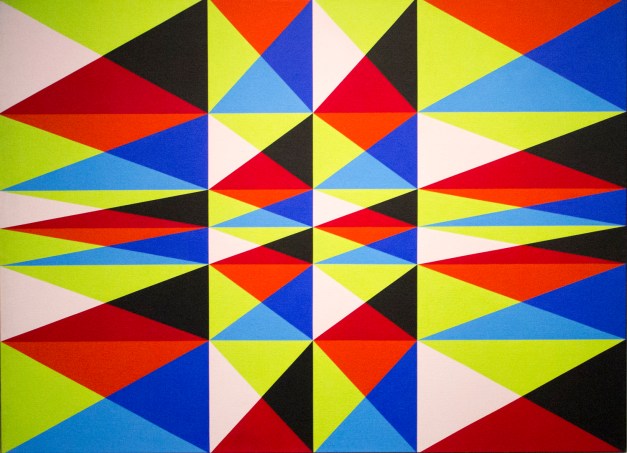
Lime Line
Dean Fleming
Lime Line-with its eye-popping colors, dynamic geometry, optical rhythms and spatial complexity-is a far cry from the cool, reductive, stable structures of Minimalism. Dean Fleming was part of a New York group called Park Place. They explored pictorial space, the ideas of Buckminster Fuller (inventor of the geodesic dome), Space Age technology, science fiction, Einstein's Theory of Relativity and related concepts of fourth dimensional space-time. Fleming believed hard-edge abstraction was the language of contemporary culture.


“There is love in me the likes of which you’ve never seen. There is rage in me the likes
of which should never escape. If I am not satisfied in the one, I will indulge the other.”
― Mary Wollstonecraft Shelley, Frankenstein

“It is true, we shall be monsters, cut off from all the world;
but on that account we shall be more attached to one another.”
― Mary Wollstonecraft Shelley, Frankenstein
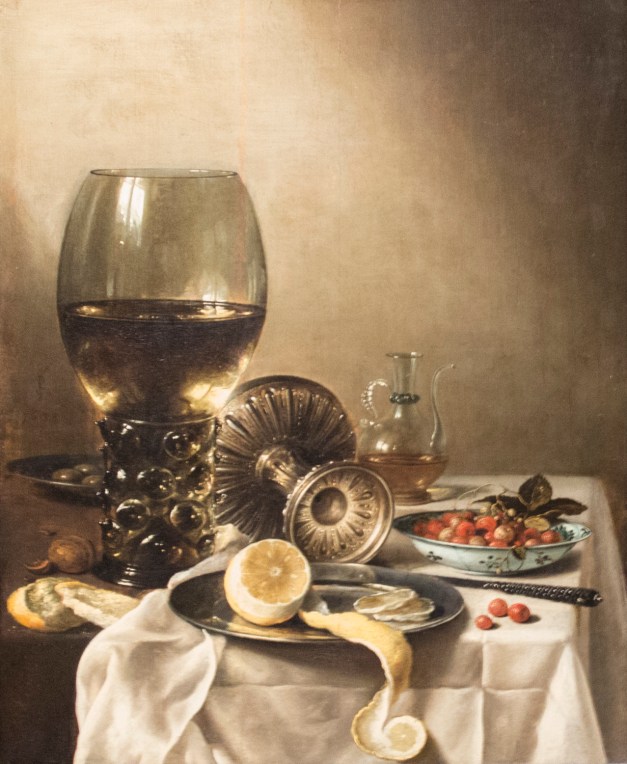
Still Life, 1638
Pieter Claesz
The 17th-century Dutch viewer would have recognized this softly illuminated still life as a representation of wealth and prosperity. The artist demonstrates his skill at depicting the various textures and reflections on the surfaces of these luxury items: a half-filled wine vessel; a silver or pewter platter and overturned cup-on-stand; a small, Chinese porcelain bowl; and a lemon, with its elegantly spiraling peel. In the porcelain bowl are wild strawberries, a delicacy typically enjoyed with French wine. The recent and seemingly abrupt departure of the person enjoying this light meal suggests the theme of vanitas, reminding us of the fleeting nature of all wealth and pleasure in our mortal state.
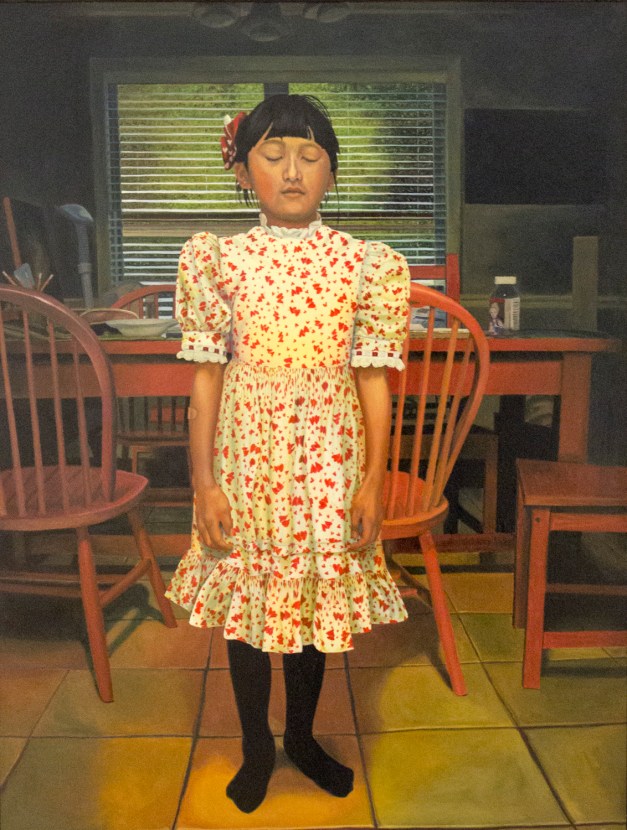
The Valentine Dress
Thu Nguyen
"Thu Nguyen’s landscape and portrait paintings are inspired by such artists as Thomas Eakins and Andrew Wyeth. She is especially interested in studying her subjects’ emotional states. In this portrait of her daughter, Nguyen depicts “the contrast between the stereotype of a carefree, sweet childhood with the reality of a life often filled with anxiety.” The girl is represented as being detached from her environment, and her rigid pose contrasts with the whimsical, heart-shaped patterns on her dress."
“This painting portrays the contrast between the stereotype of a carefree sweet childhood with the reality of a life often filled with anxiety, confusion and loneliness. While the girl is wearing a cute sentimental valentines dress, her entire posture is self contained and rigid. She is standing in a typical kitchen but seems physically and emotionally detached from her environment.” – Thu Nguyen


"Amy Sherald (born 1973) is an American painter based in Baltimore, Maryland. Her work started out autobiographical in nature, but has taken on a social context ever since she moved to Baltimore. She is best known for her portrait paintings that address social justice, as well as her choice of subjects, which are drawn from outside of the art historical narrative. Through her work, she takes a closer look at t the way people construct and perform their identities in response to political, social, and cultural expectations.”
Interview with Amy Sherald, winner of first prize at “The Outwin Boochever 2016” for her painting: “Miss Everything (Unsuppressed Deliverance).”
🐇
 Maverick Mist